Midmarket solution: Assess Standard
Through customer research, I found that most of our midmarket customers have pre-existing policies but are overwhlemed navigating our Enterprise policy builder.
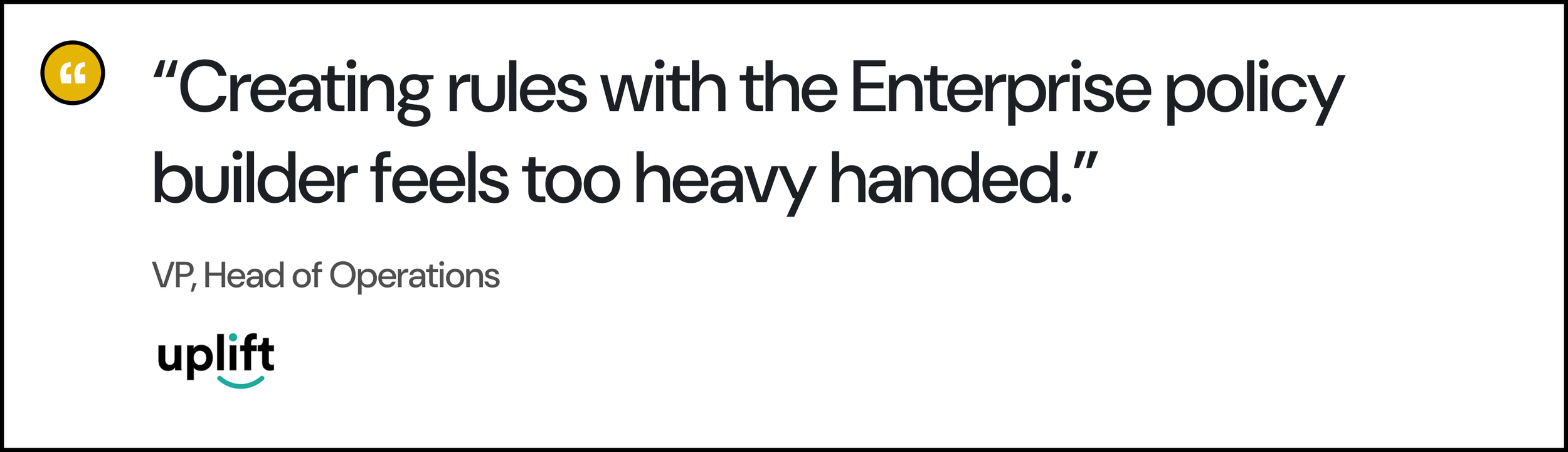
I validated this direction with eight mid-market customers.
The feedback was consistent:
fewer categories
automation for who qualifies
guidance without restriction
That insight shaped the final Standard experience.
Design explorations
To make the Enterprise builder more accessible, I ran a series of design explorations. The midmarket tier needed to feel accessible while maintaining power for complex policies.
Exploration I: Build policies from background checks
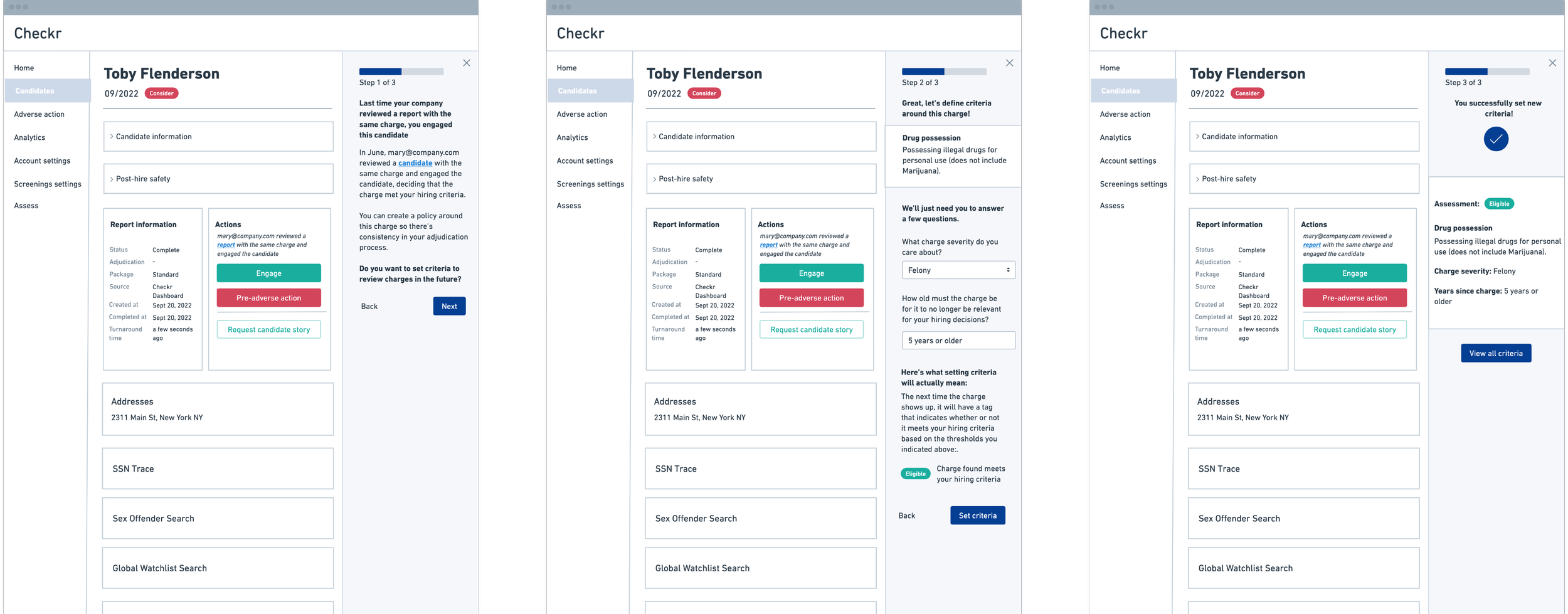
I explored prompting adjudicators when they’re making decisions in real-time from the Reports page to see if they want to create a policy.
Exploration II: Use past decisions to make policies
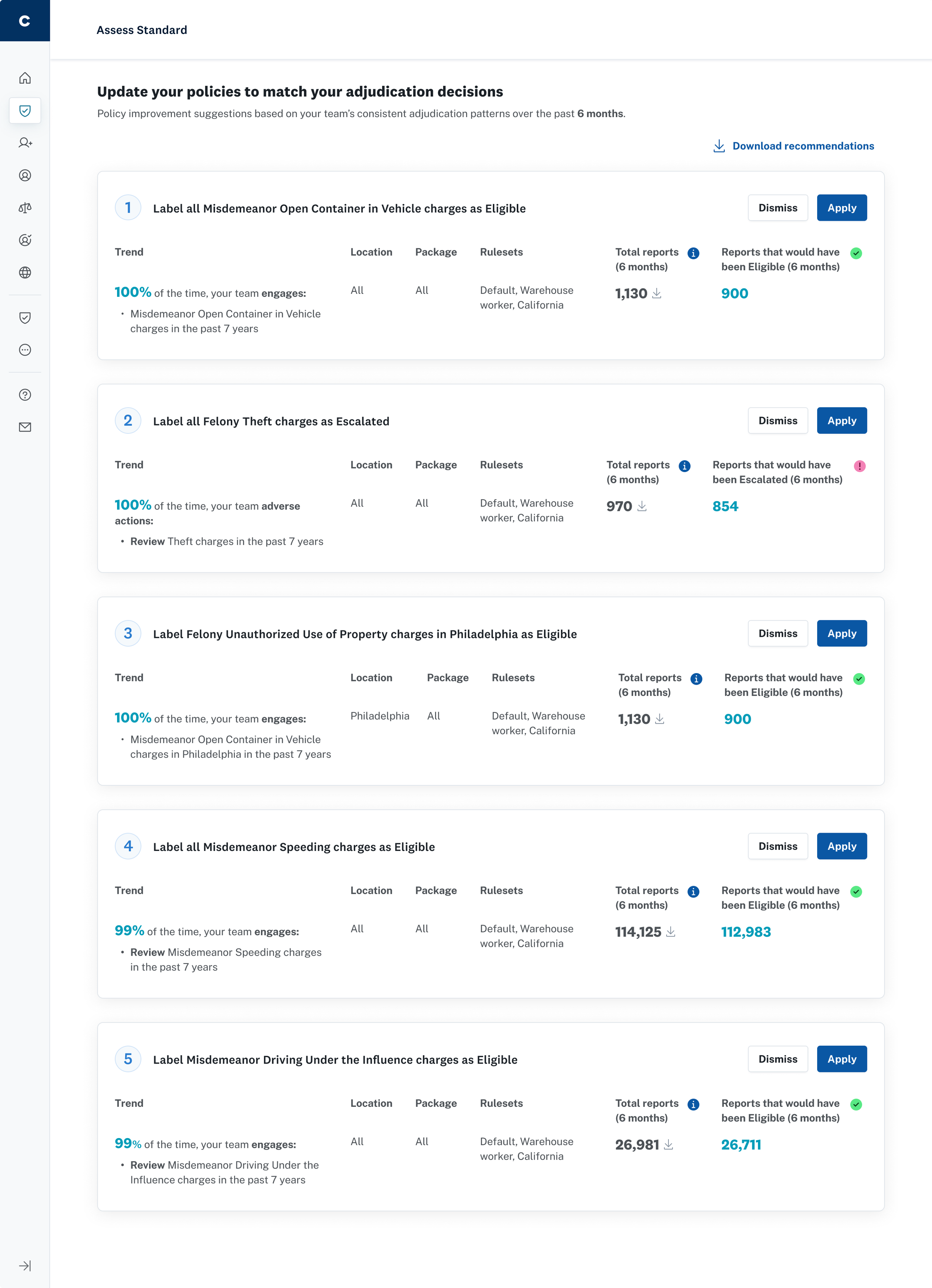
I wanted to leverage employers' past decision-making data to encourage employers to create policies on their top 5 reviewed charges.
Exploration III: Standalone policy builder
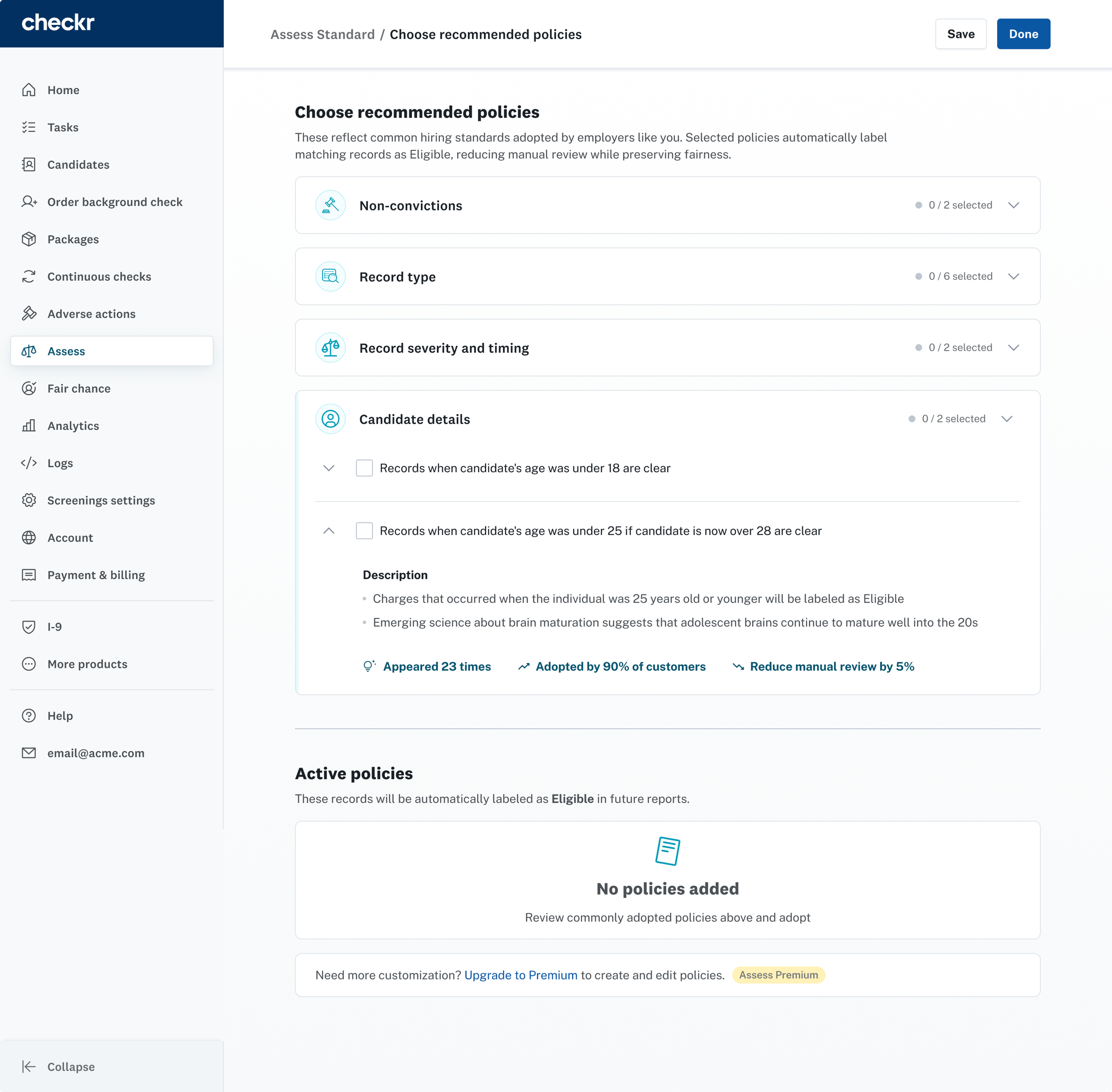
Recap of design explorations:
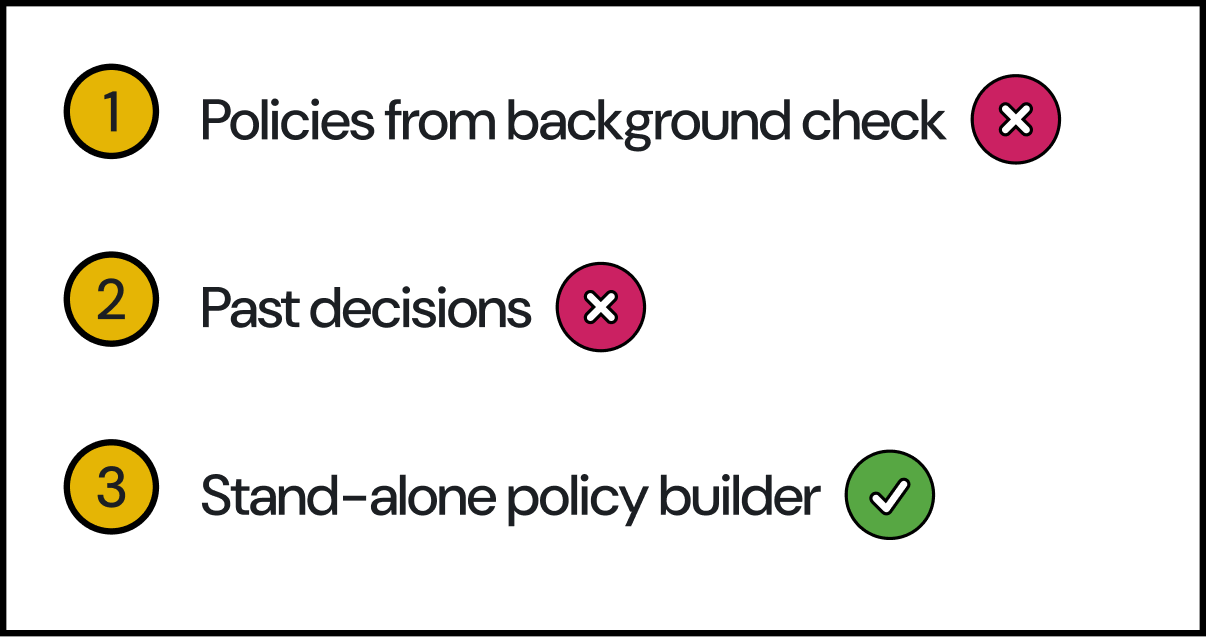
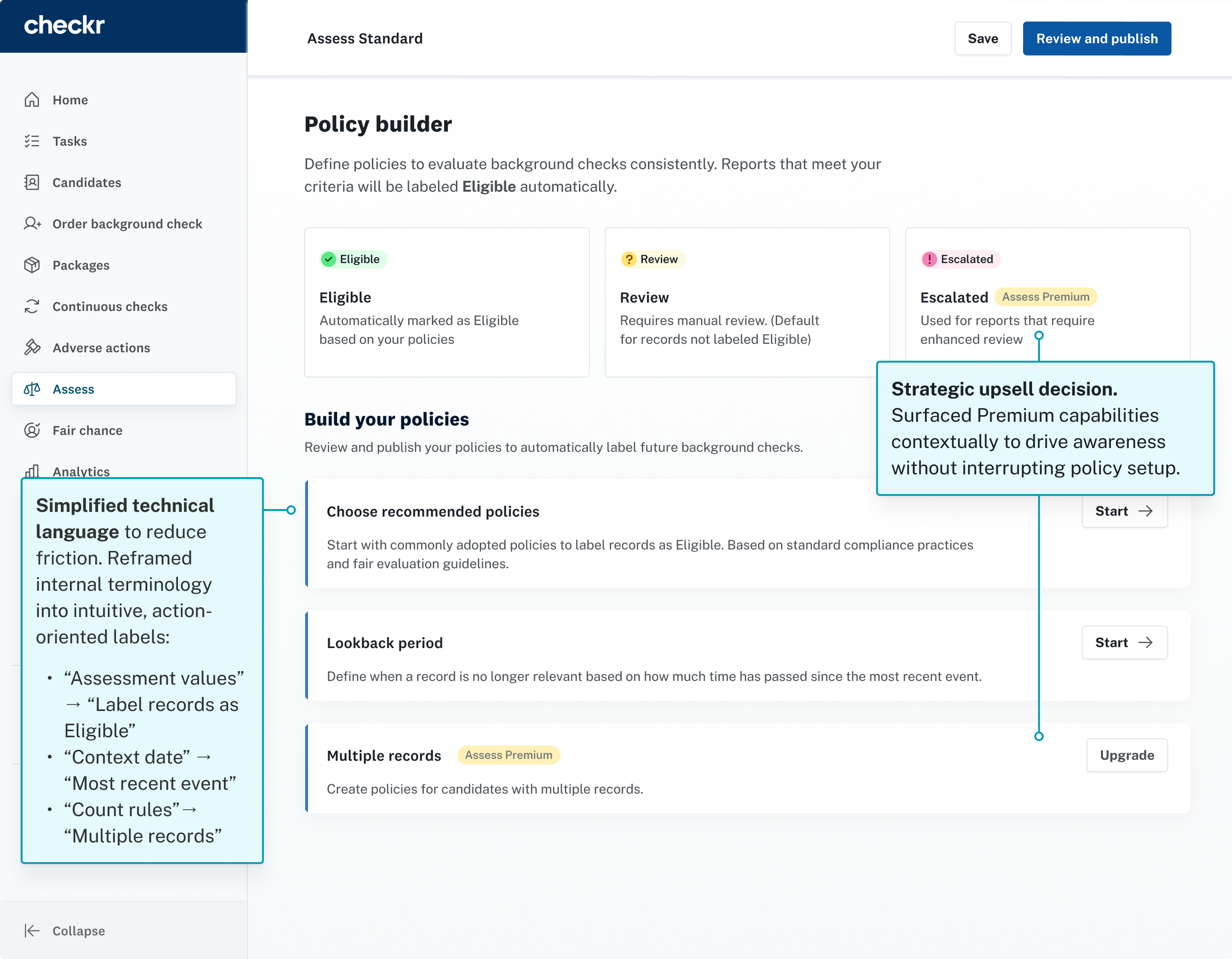
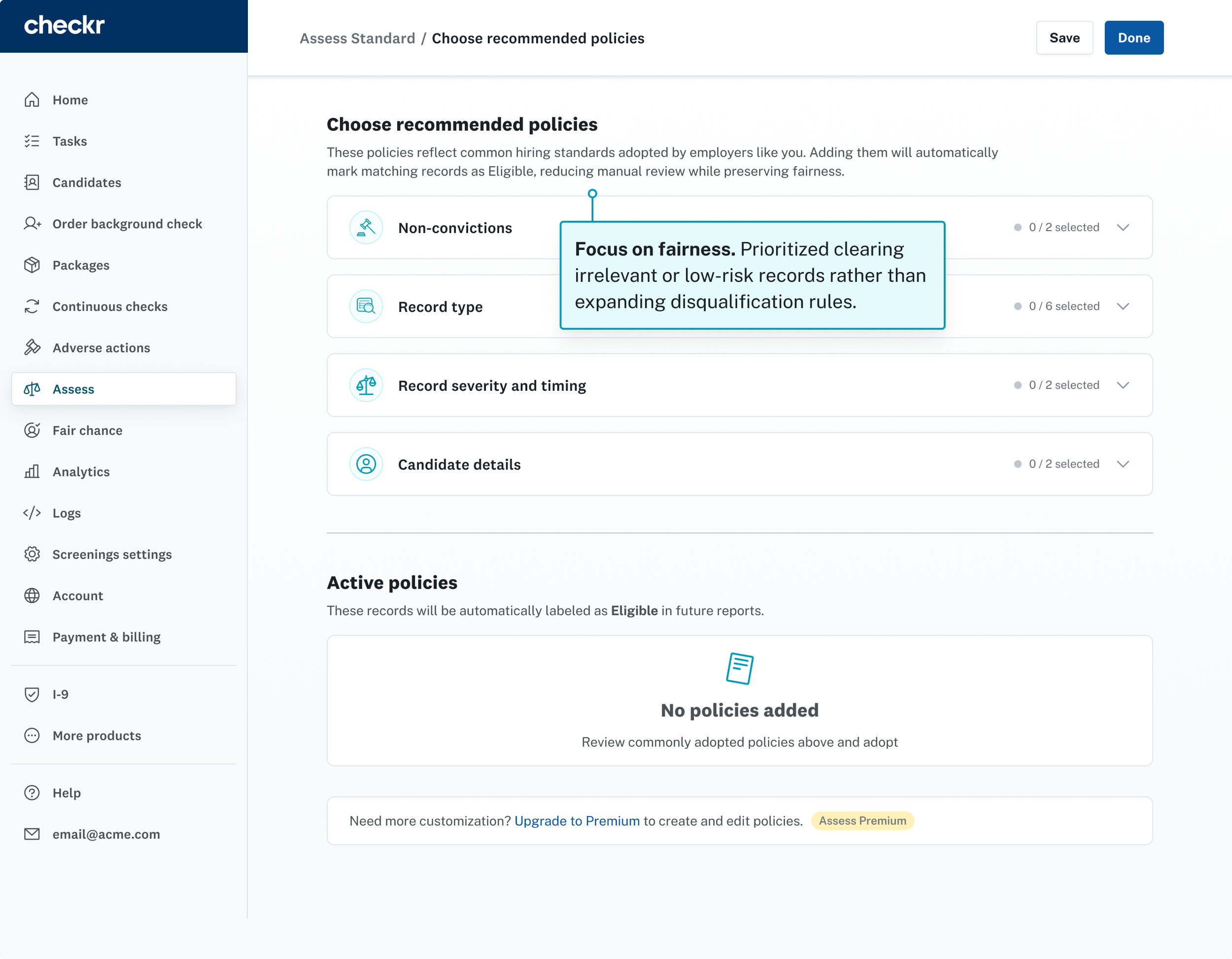
Key design decisions
Standard serves midmarket employers who want more configurability than SMB customers but don’t need the full complexity of enterprise controls. These customers value autonomy and want to fine-tune policy logic themselves. They want to feel “guided but not limited.”
What I designed
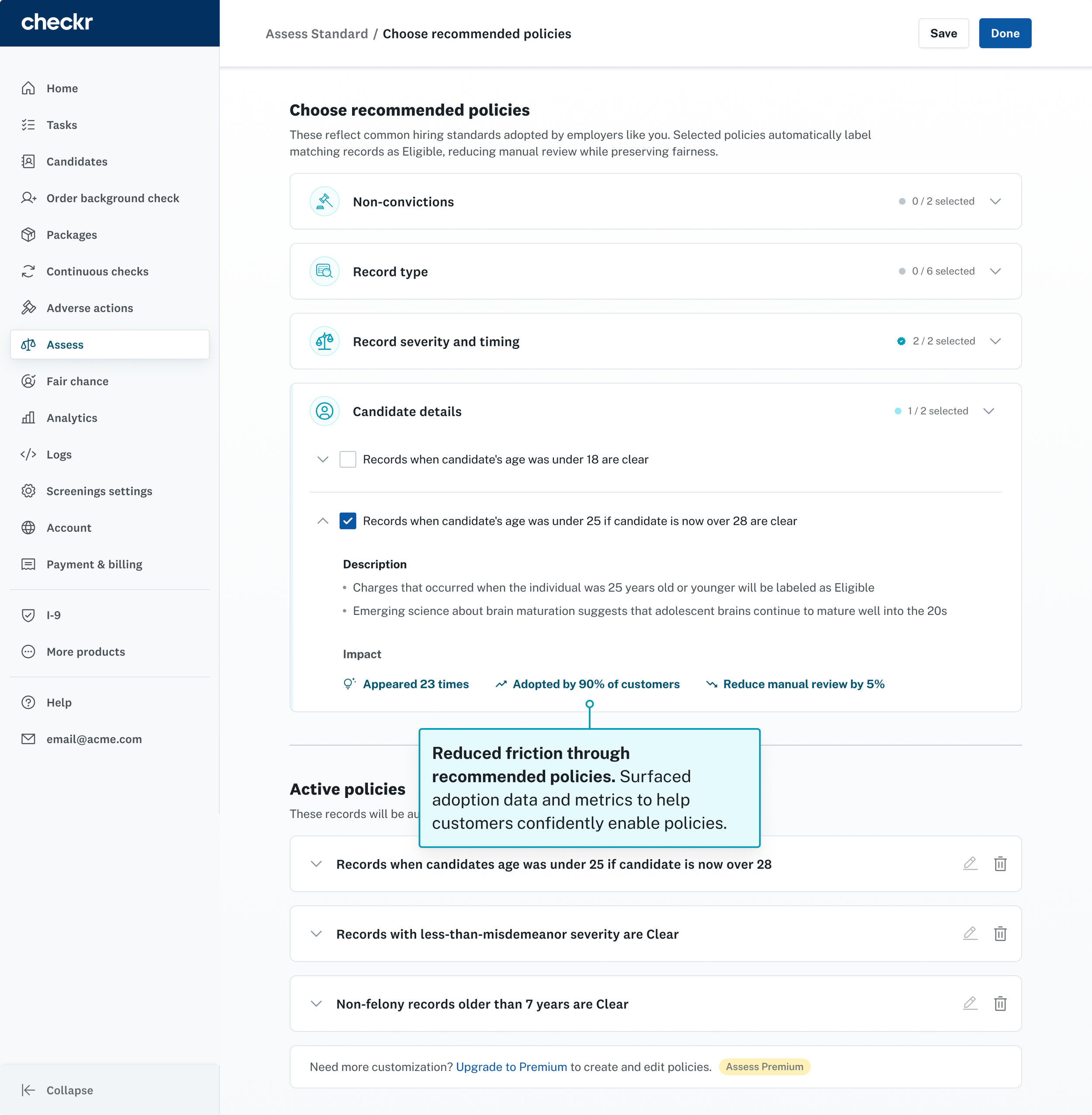
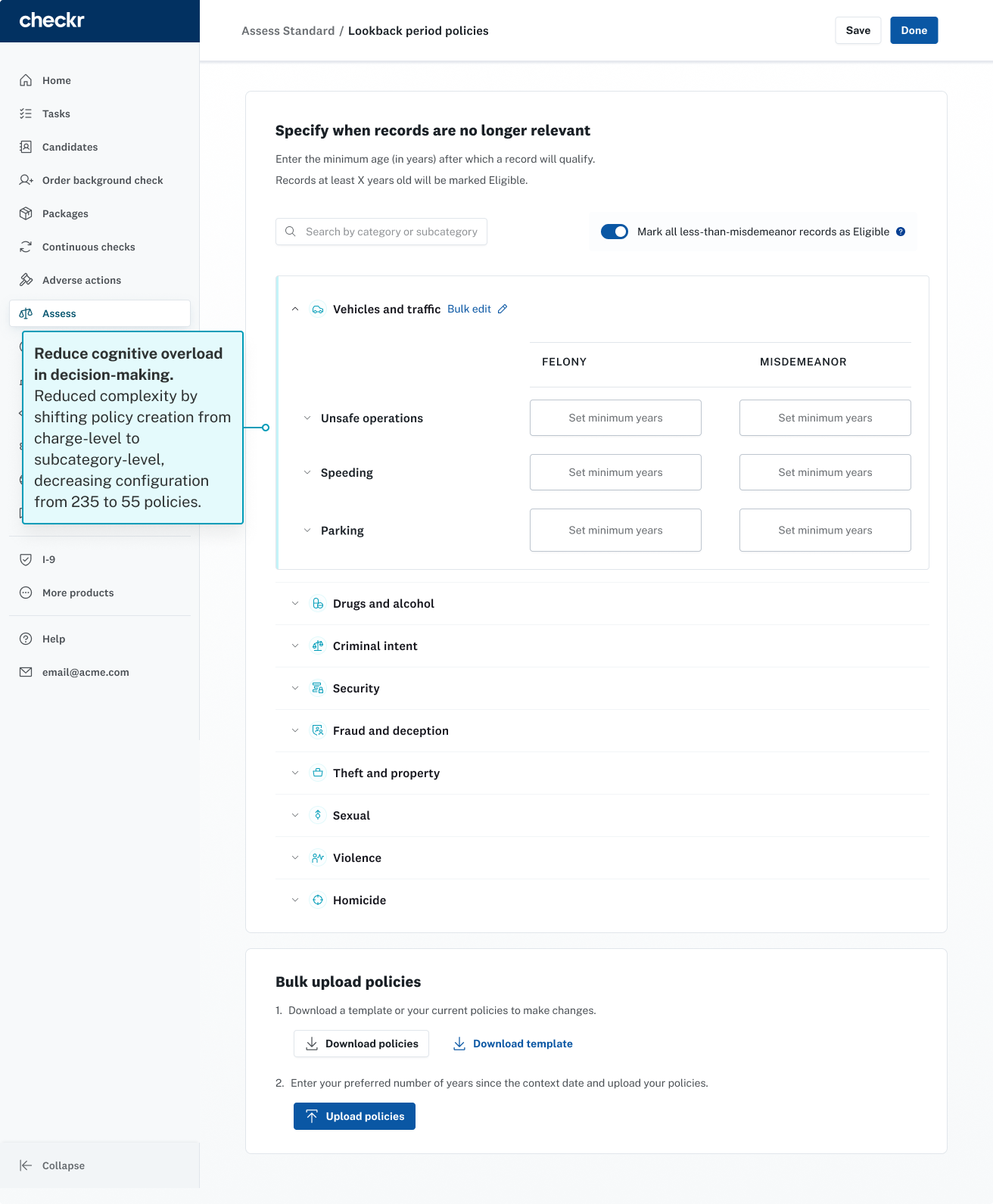
Adjustable rules that allow editing thresholds, categories, and decision logic
Smart defaults + editable templates to balance speed with customization
Clear rationale explanations to build trust in each configuration choice
Why it matters
Midmarket teams can self-configure without support, reducing time-to-value and strengthening the quality and consistency of hiring decisions.
Design visioning & tradeoffs
My initial explorations included using employers' historical adjudication data to recommend policies on their top 5 reviewed charges. This tested well but was deprioritized to focus on new customer acquisition. In hindsight, I would have:
Fought harder for this feature's inclusion in MVP
Run a smaller experiment with 10 existing customers to prove conversion lift
Proposed it as a Premium-only feature to drive upgrades
Learning: Data-driven personalization has exponentially more impact than static templates, even when targeting new customers.
Impact
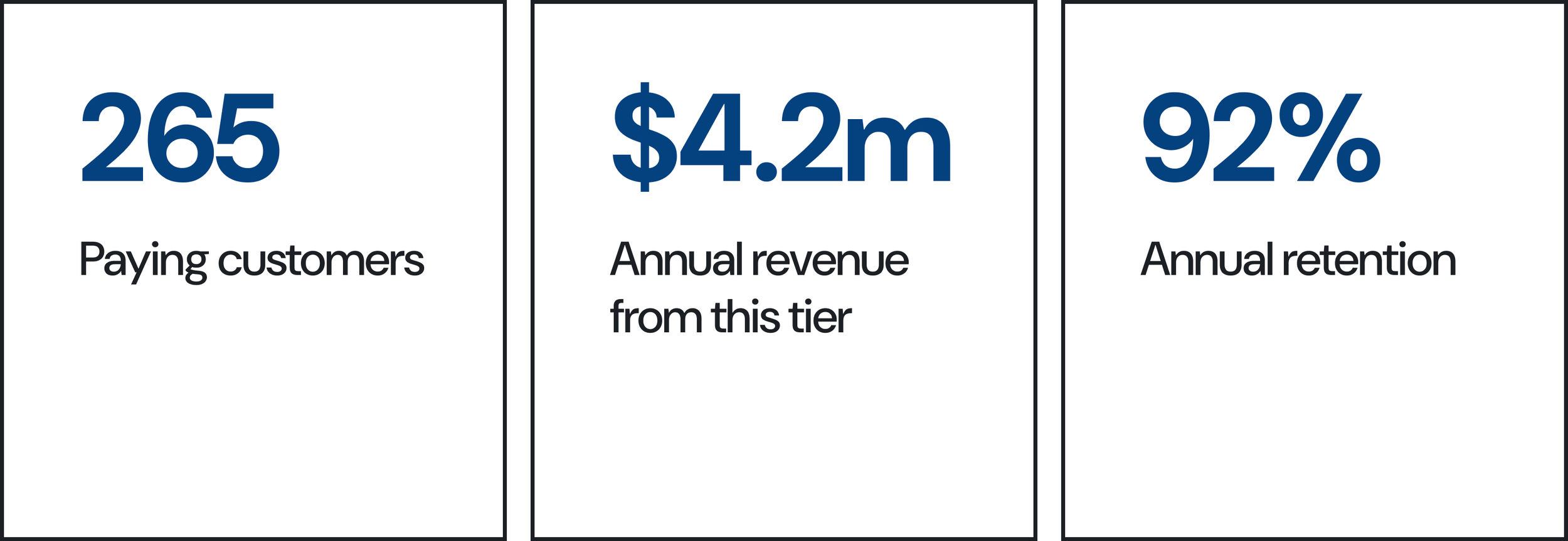
Adoption: 248 paying customers within 18 months (73% of target segment)
Efficiency: Setup time dropped from 4-6 weeks → 4 days (94% faster)
Usage: 70% average reduction in manual review time
Revenue: $4.2M ARR from this tier alone Retention: 92% annual retention (vs. 85% industry average)