Candidate Stories
Historically, background checks condense the history and context of someone’s life into a single label. One-third of Americans have a criminal record and are consistently denied jobs because of their background check.
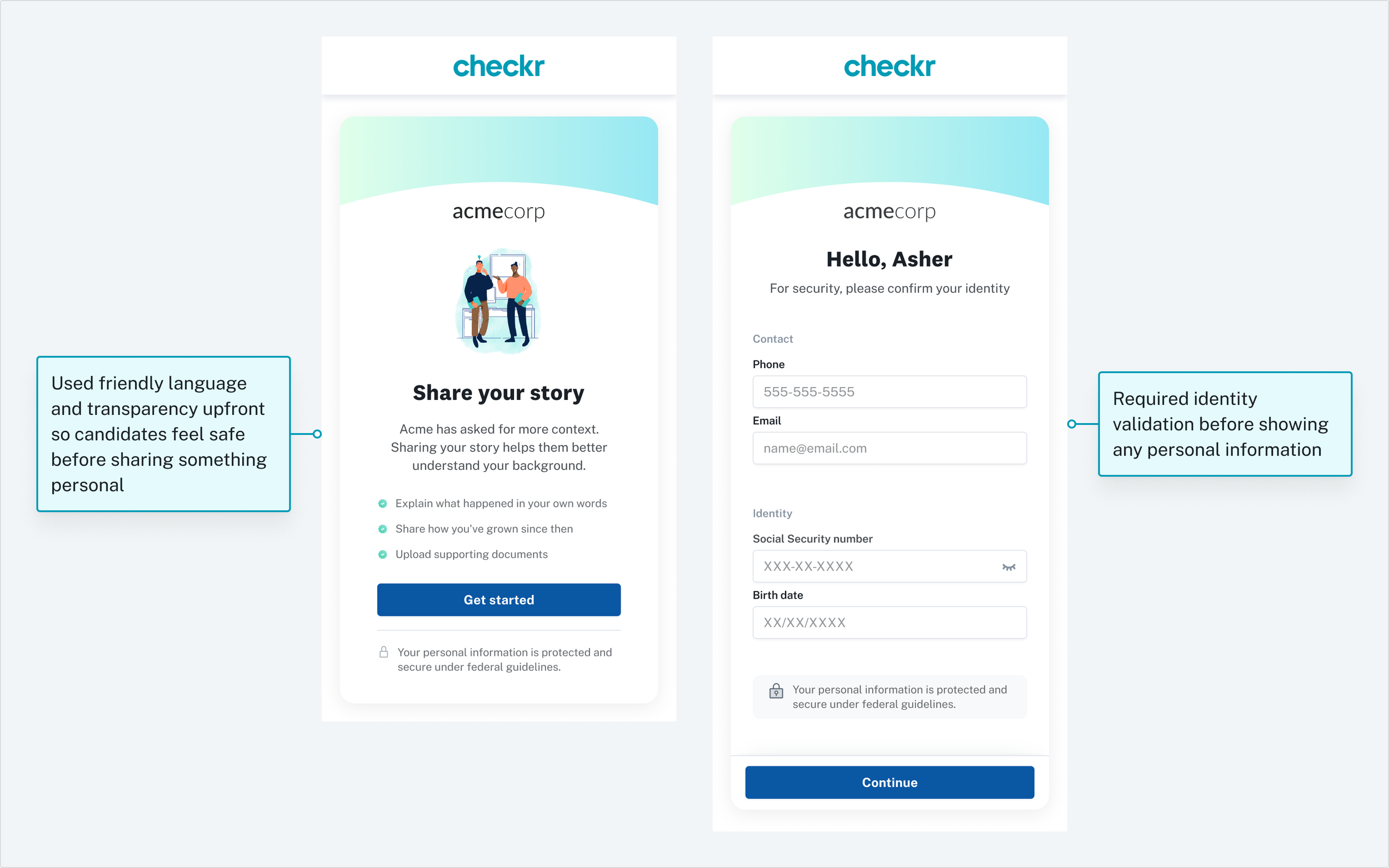
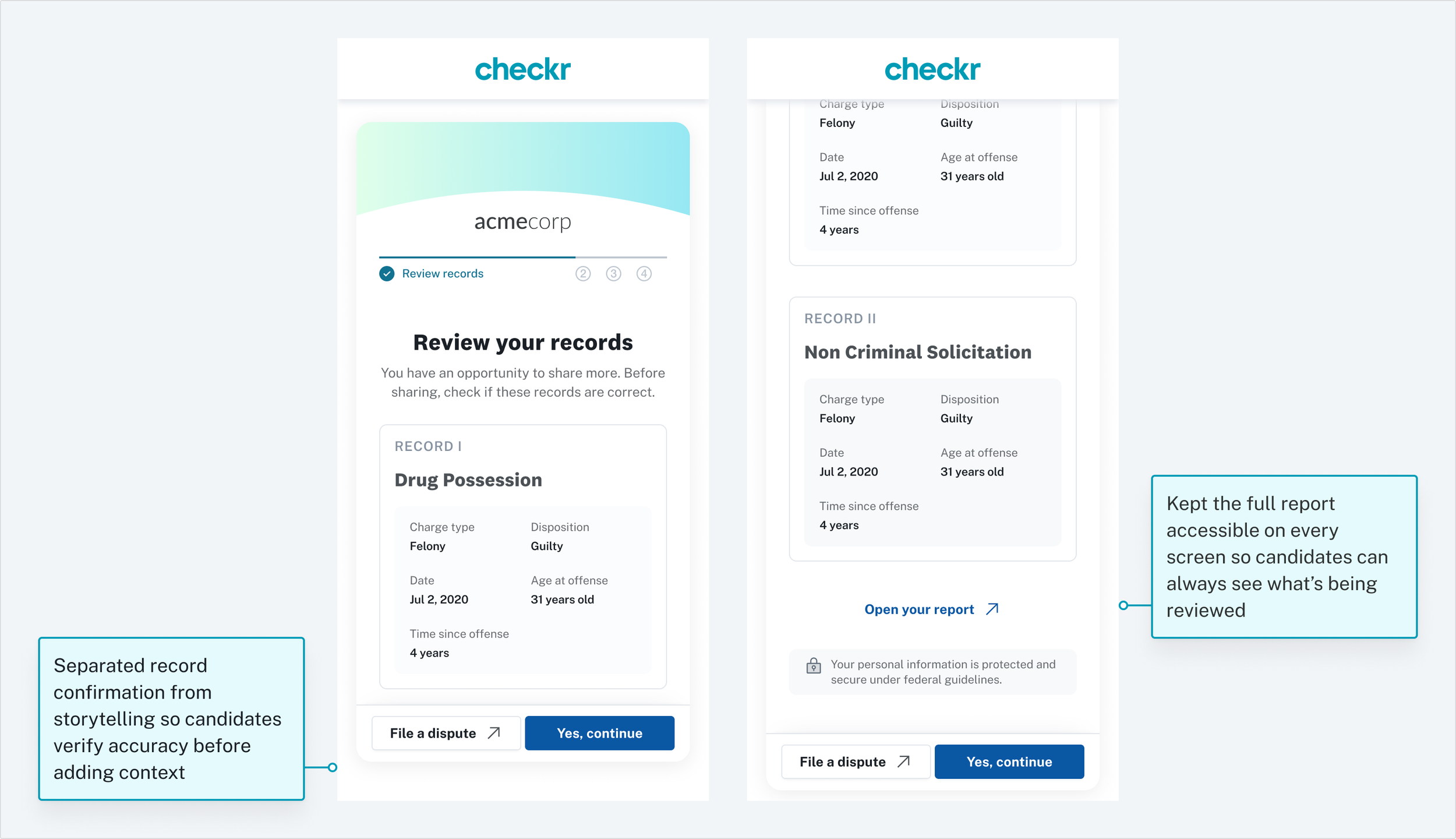
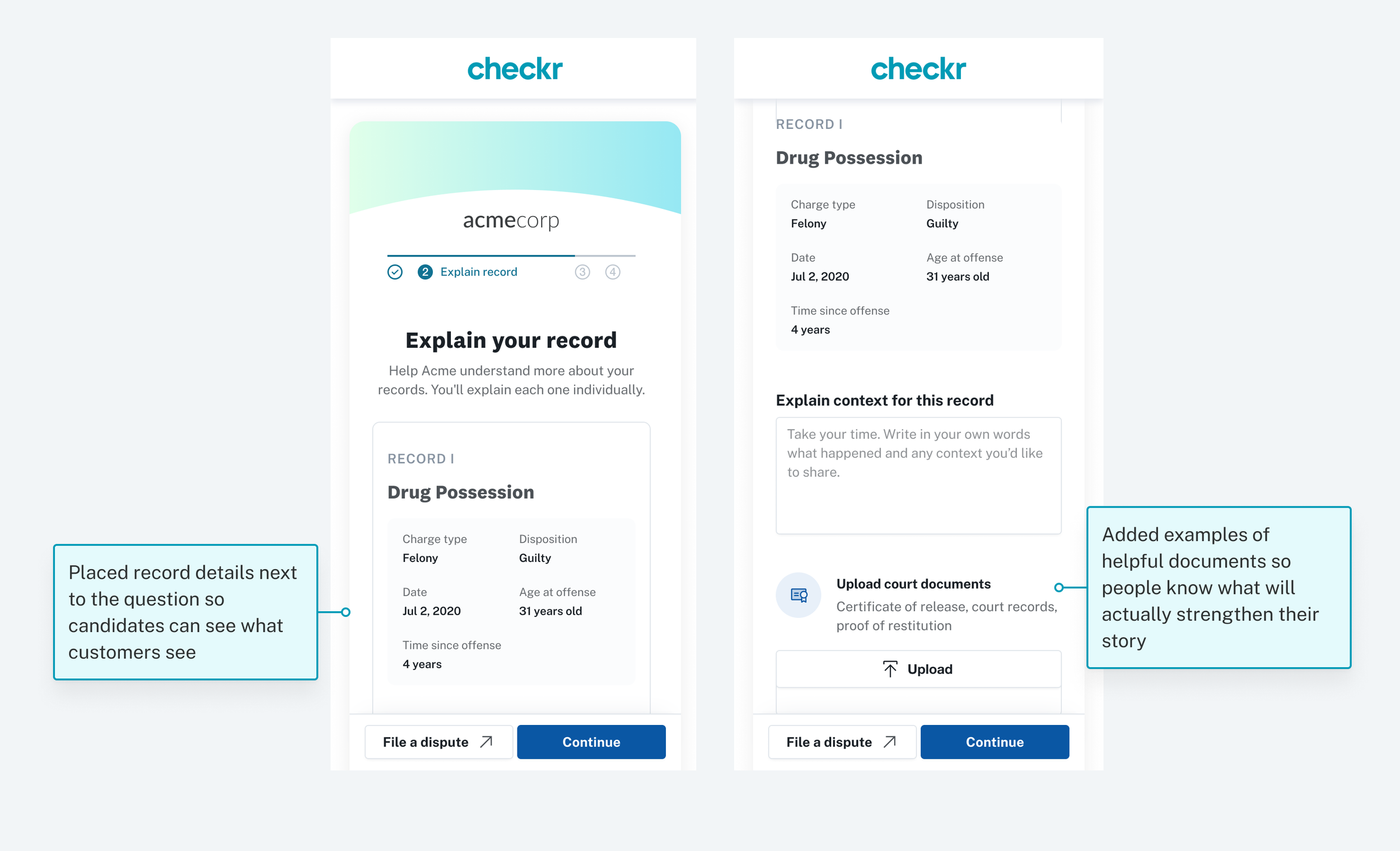
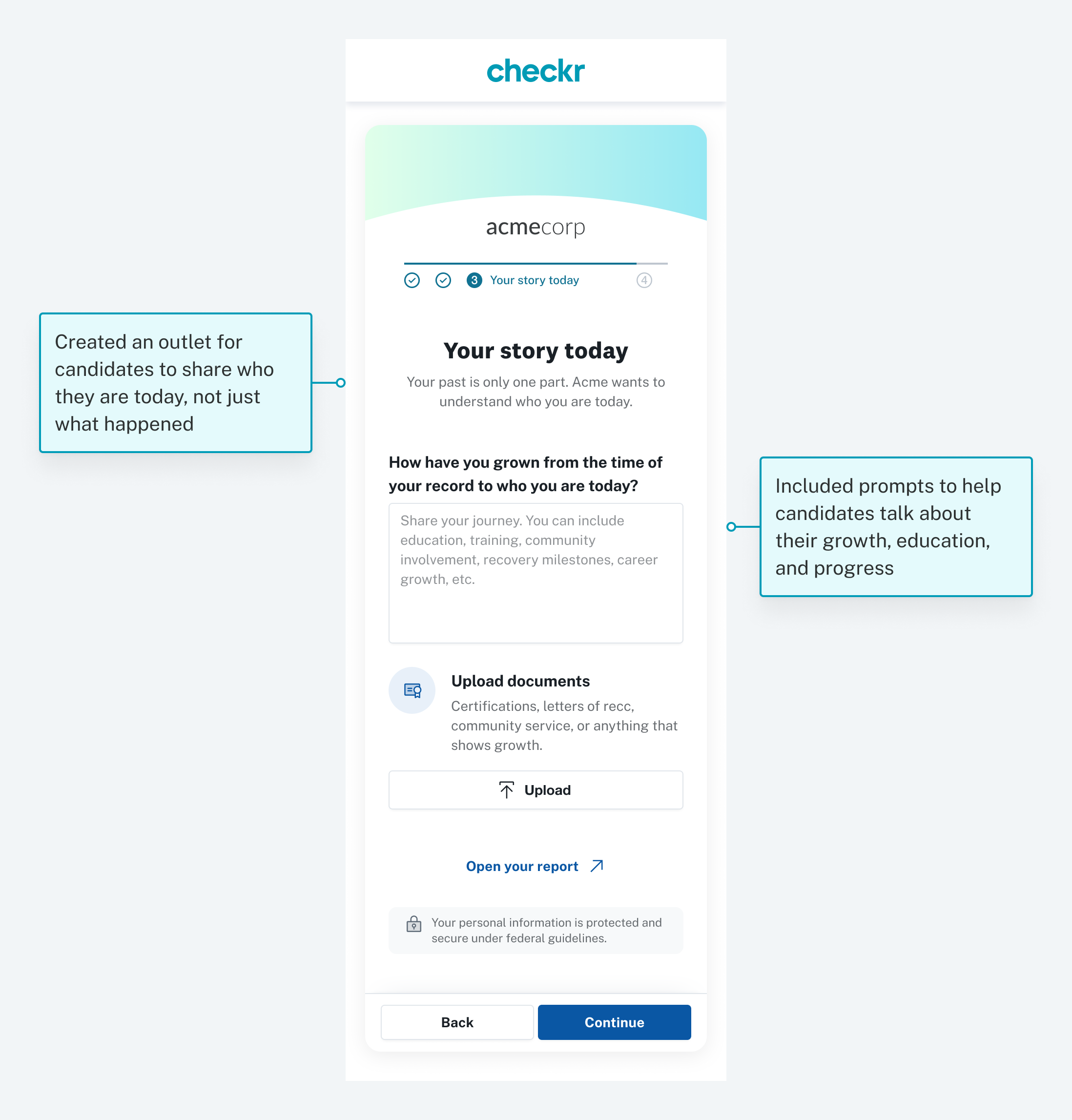
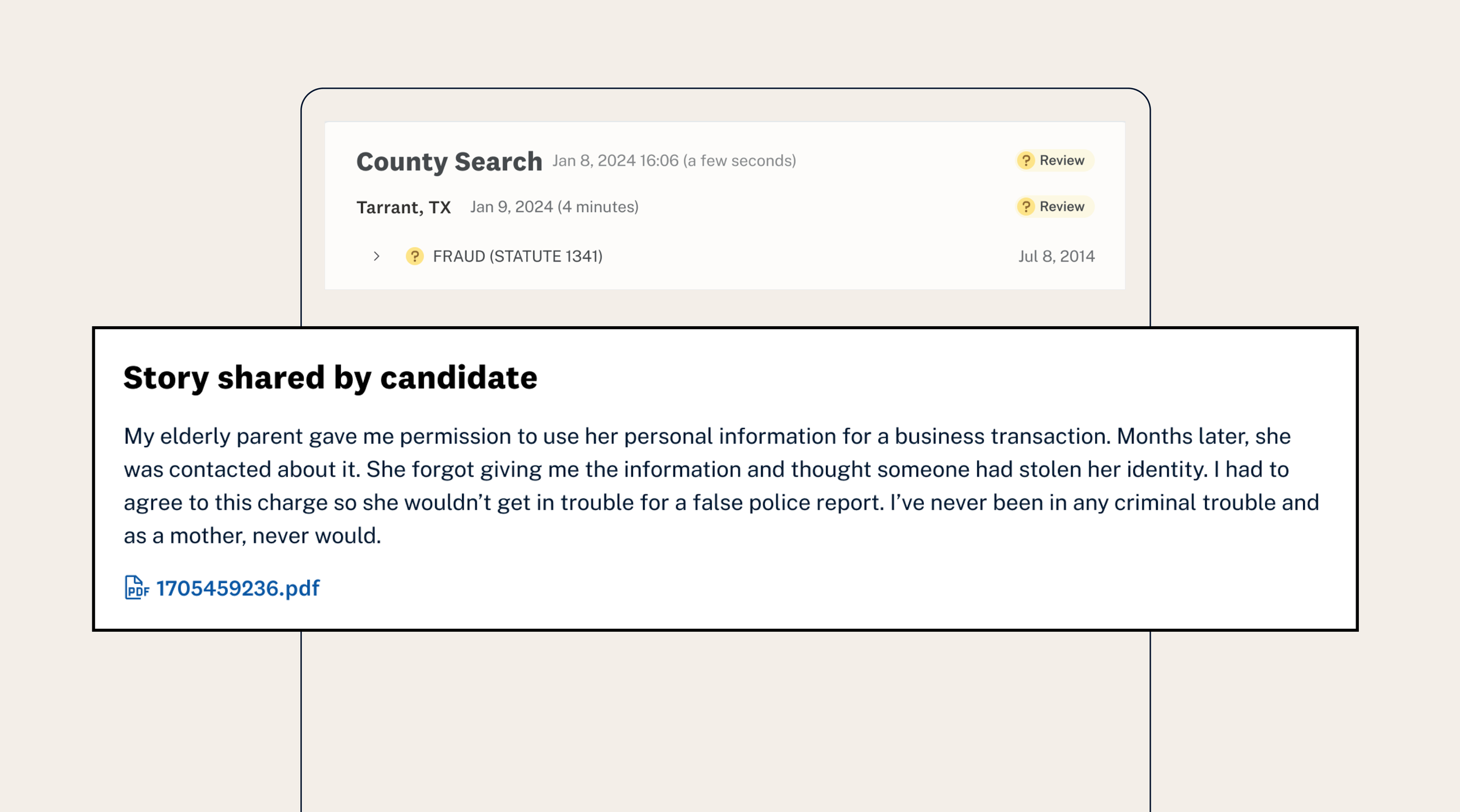
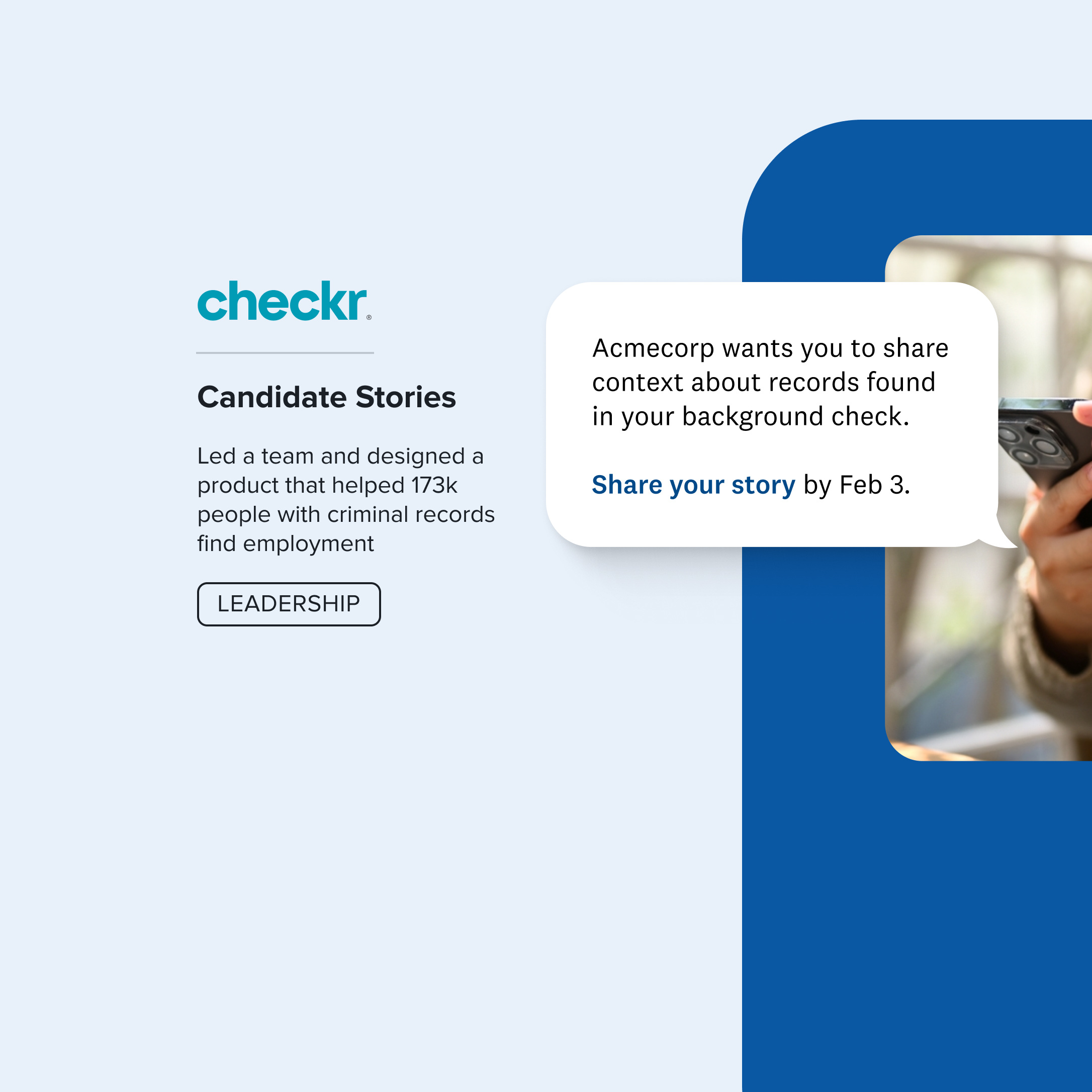
I built and led a cross-functional team to help adjudicators (background check decision-makers) see the human behind the check. I designed a flow, Candidate Stories, that lets candidates (job-seekers) provide context and evidence of rehabilitation directly on their background check.
I pushed forward this idea and built Candidate Stories outside of our regular product roadmap, constructing the team and acting as both the lead product designer and lead product manager.
Since its launch:
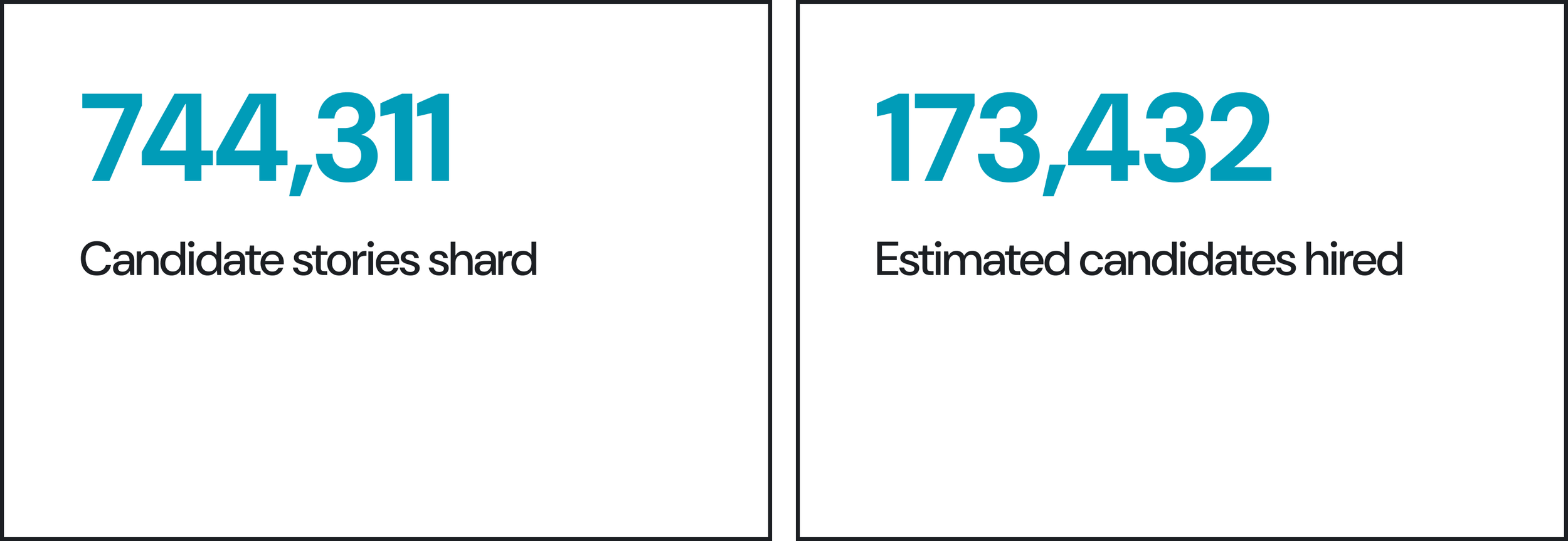
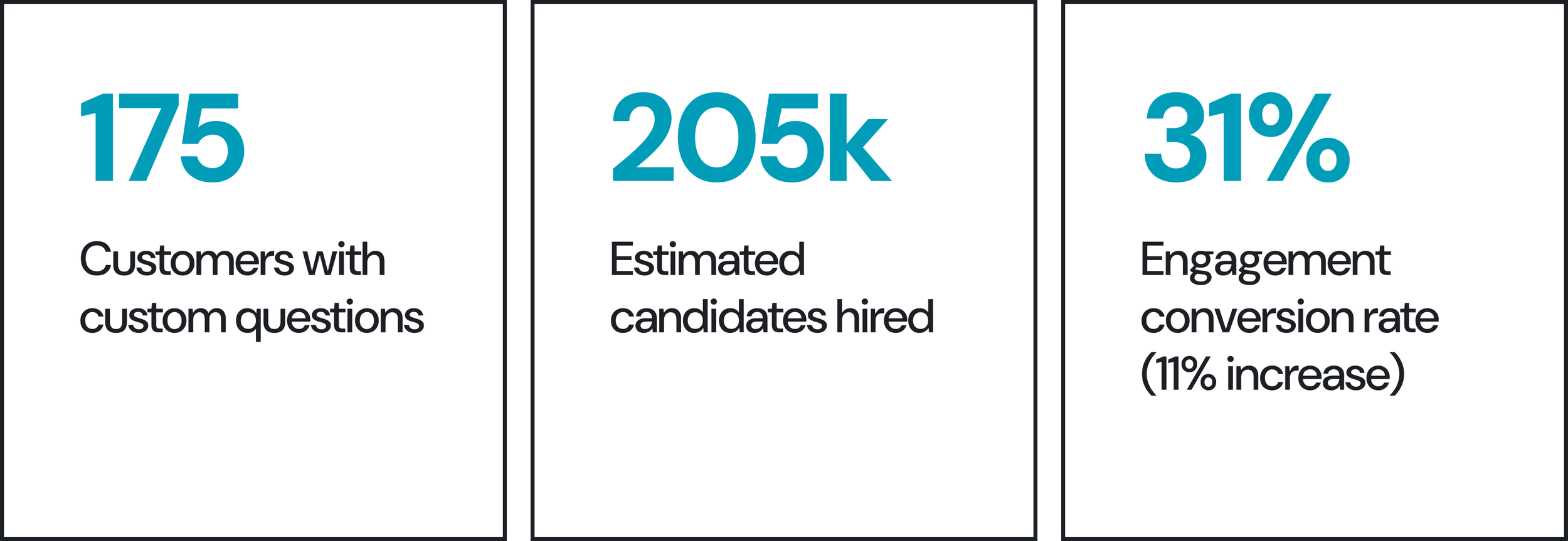
744k candidate stories have been shared with employers
Estimated 173k candidates have been hired because of their story.
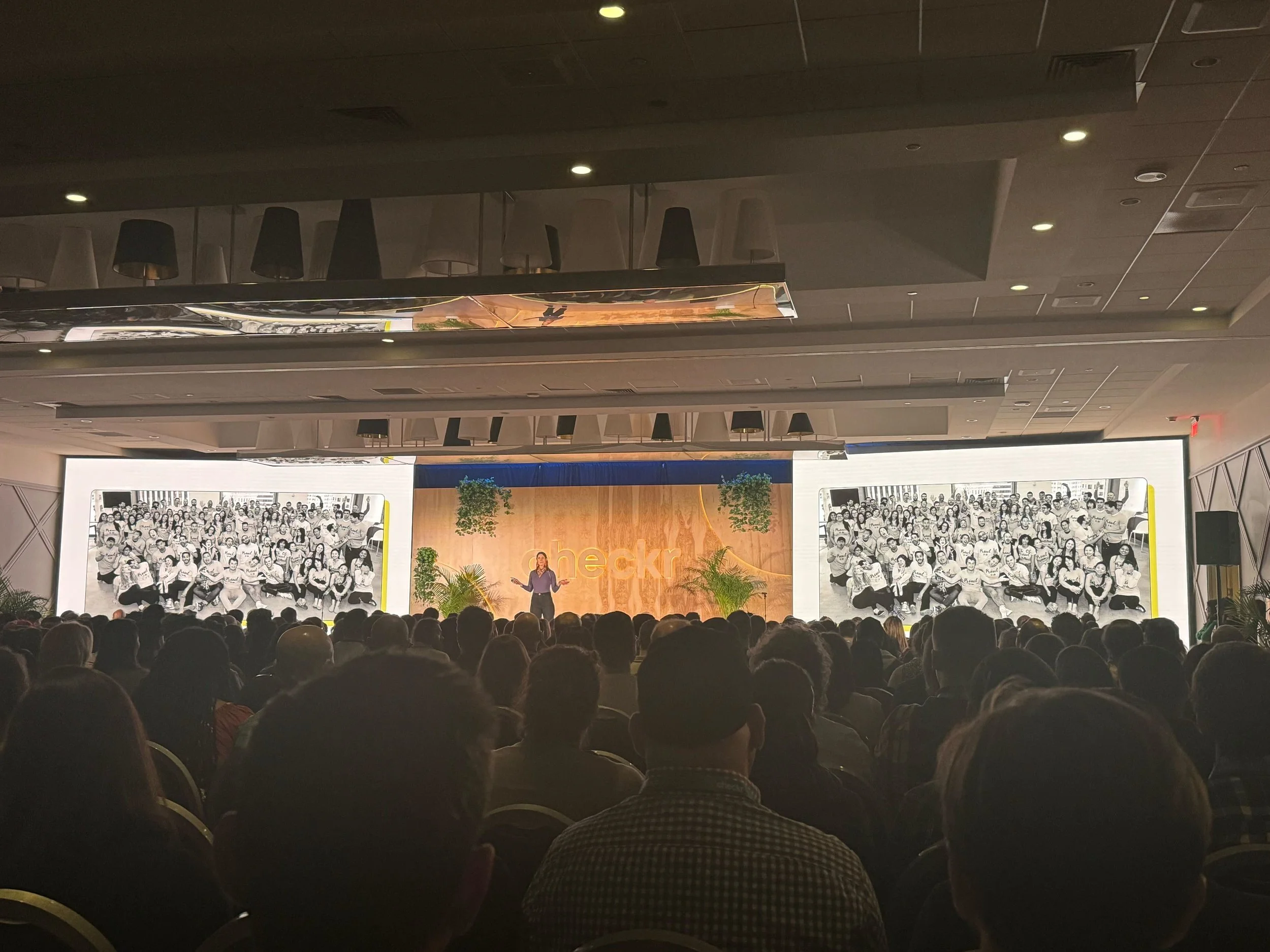
I shared Candidate Stories to the California Civil Rights Department in 2023, to demonstrate how background checks can be a tool for inclusion, not exclusion.


About Checkr
Checkr is a background check company disrupting a dormant industry. Checkr understands how difficult it is for individuals with conviction histories to find employment and strives to help provide fair chances for the formerly convicted.
My team
Role: Owner, Product Manager, Product Designer
Length: 3 months
Team: 1 Engineer, 1 Candidate Support Manager
Year: 2020 MVP, 2025 Expansion + Rearchitecture
My involvement
Launched Candidate Stouries outside of the product roadmap:
Created idea
Built the business case
Design vision and execution
Executive buy-in
Shared to CA Civil Rights Department
Problem
Individuals with criminal records, including the 650,000 people released from prison each year, face significant challenges when applying for work. Without a steady job, citizens reentering society are nearly twice as likely to recidivate, or return to prison, than those who do find work.
Many people with criminal records seek opportunities in the gig economy, where companies rely exclusively on background checks to determine if a candidate qualifies for a position without ever meeting them. The vast majority are denied jobs because of their background check.
Personas
I worked with our UX researcher to create candidate personas to build empathy and make background checks more humanizing. I wanted to build a fairness product with Samuel in mind, who is our previously incarcerated persona.
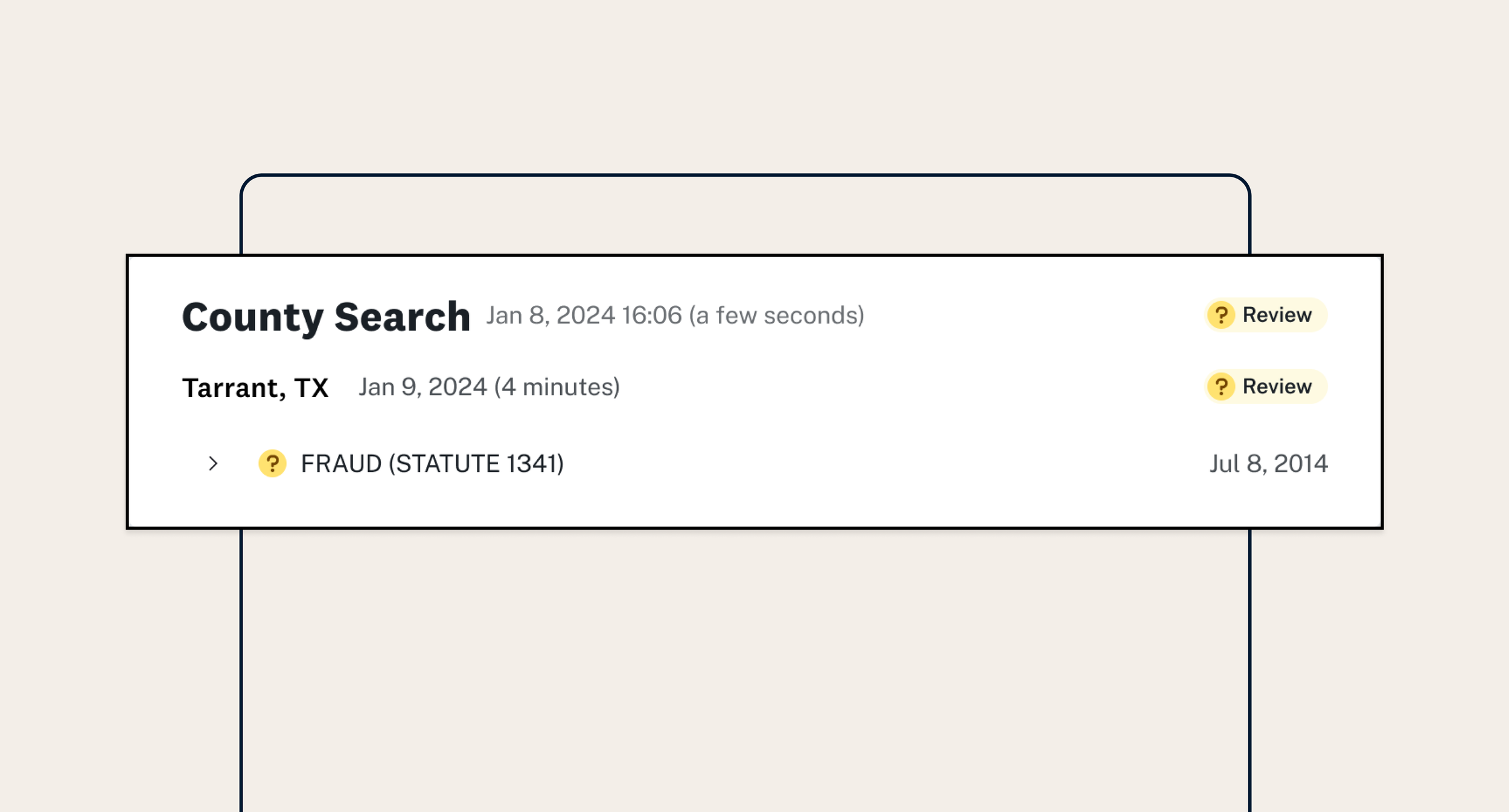
One of the main problems is that background checks flatten someone’s life into a single label. Without context, employers often make fear-based decisions that perpetuate systemic barriers.
Design sprint to brainstorm ideas
With personas to ground our conversation, I assembled a diverse team of candidate experience representatives, designers, product managers, engineers, and justice-impacted individuals, to voice differing opinions and approach how we can build better solutions from their unique perspectives.
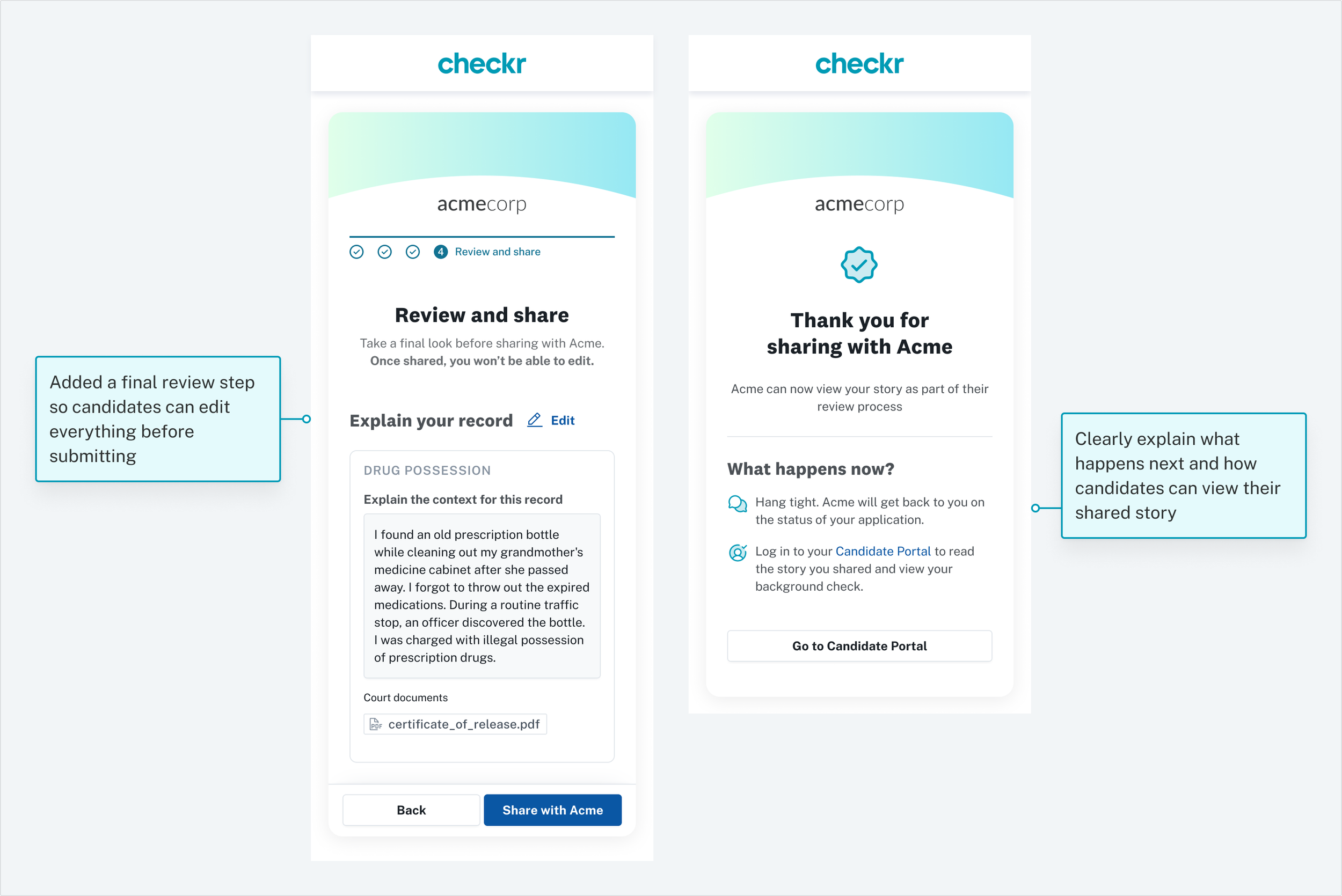
Through the structured design sprint, we thought of creating a form for a candidate to contextualize their background check results and provide positive information about themselves that an employer could easily review.
Strategic reframing
The social impact and mission angle will always be hard to resource against top business-competing priorities. I repositioned this as a three-sided business problem:
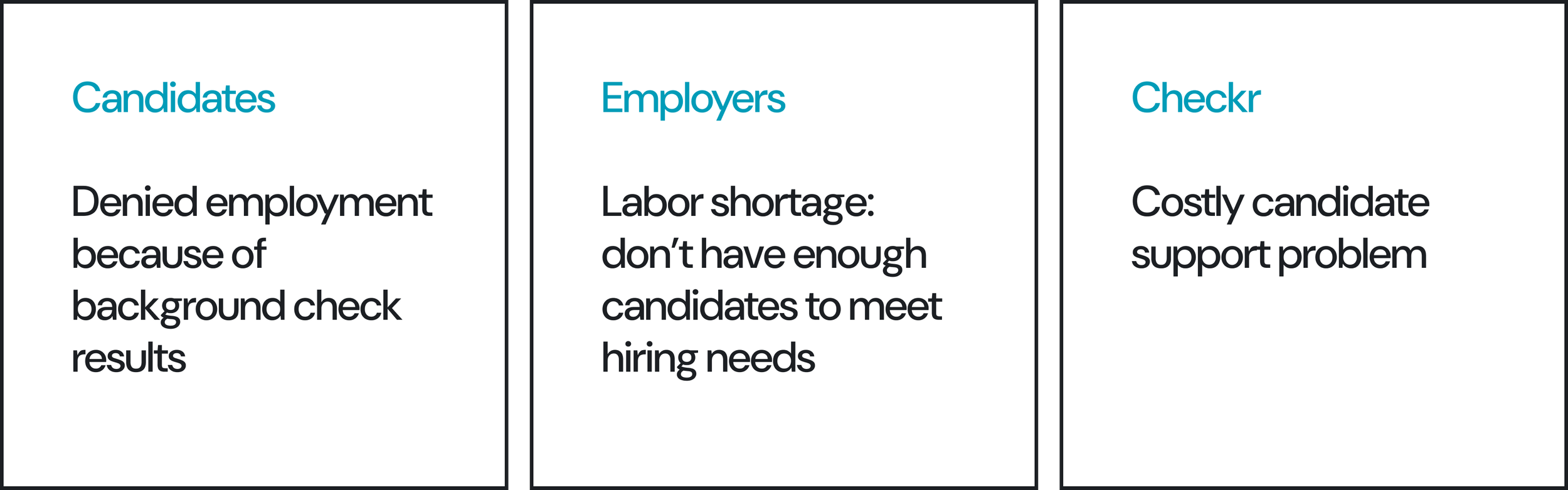
Turning a customer request into strategic leverage
I looked for strategic leverage. A key enterprise customer requested secure document upload. Rather than shipping it as a narrow feature, I reframed it as infrastructure for candidate storytelling. This allowed us to advance a mission-driven initiative under the umbrella of a revenue-aligned NPI (new product input).
Building the team
Once I reframed the initiative, I was given the green light to move forward, as long as I could find the resources.
Since I wasn't going through the official roadmap process, I had to build the team through influence. I partnered with a CX manager who was closest to candidate support so we could stay grounded in real problems. I also brought in an engineer who really believed in the impact. He worked with his manager to dedicate himself full-time to the project.
The three of us moved quickly to launch Candidate Stories.
Early design explorations decisions and tradeoffs
How might we leverage the customer request to design a solution that’s more holistic and candidate-cenric?
To create momentum and visualize our idea, I designed quick wireframes and started circulating with the team. I started with lo-fidelity whiteboard wireframing and then started to refine in Whimsical.
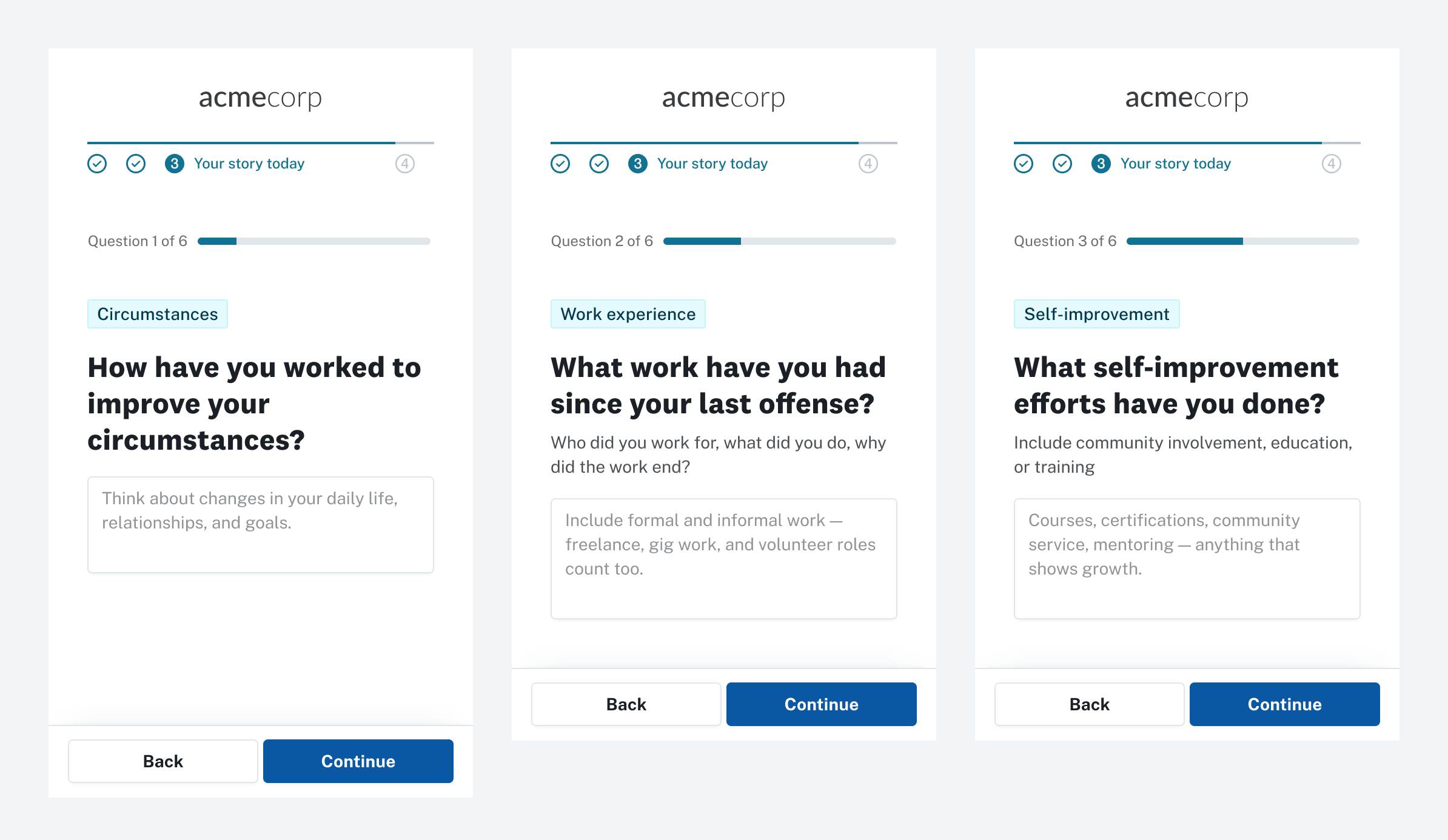
I explored three approaches:
Exploration I: Structured questionnaire
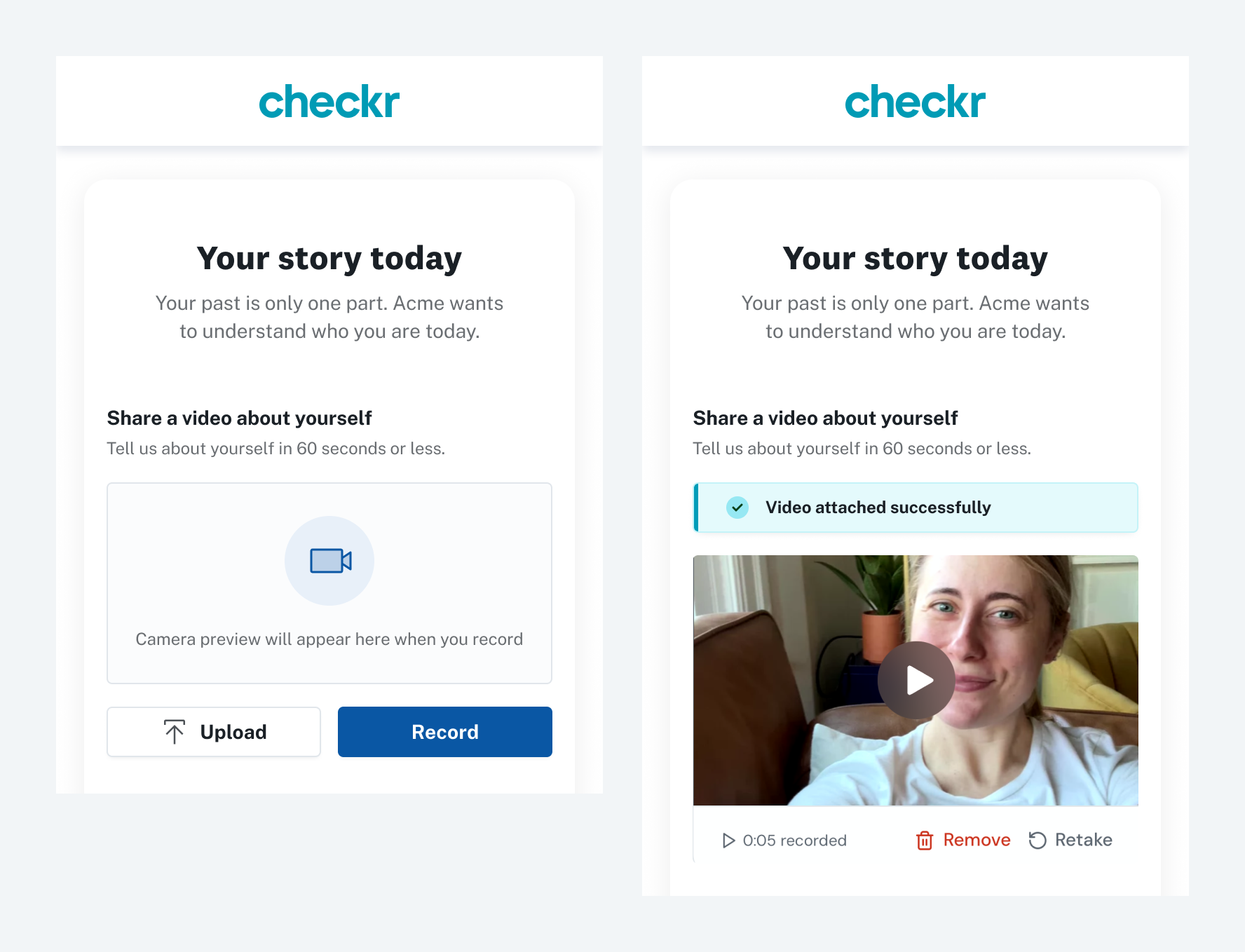
Exploration II: Video stories
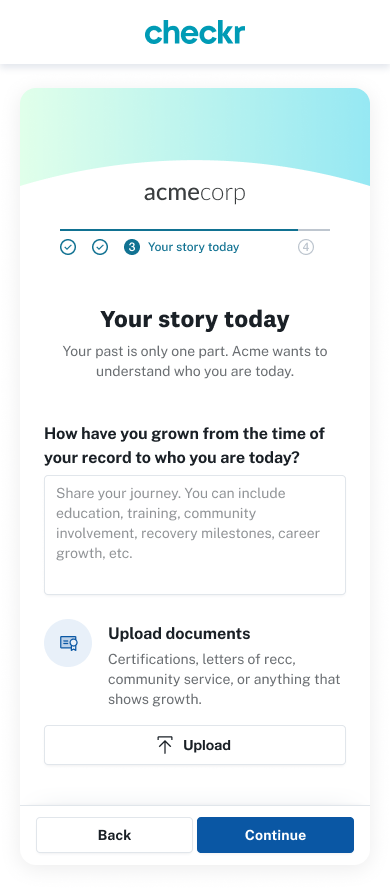
Exploration III: Freeform text with one question per step
Concept testing
I concept tested with 7 key employers and found:
Structured questionnaire ❌
Hesitation over higher candidate drop-off with too many questions
Could work if employers can customize their own questions
Video stories ❌
While videos can be more personal, they’re more time-consuming to review and can introduce additional biases
Free-form text ✅
Allows candidates to fully express themselves and share what they find relevant
Concept testing & validation
I was focused on the candidate experience in my preliminary designs, but concept testing quickly revealed that for this to be an impactful feature, there needs to be a robust workflow for employers.
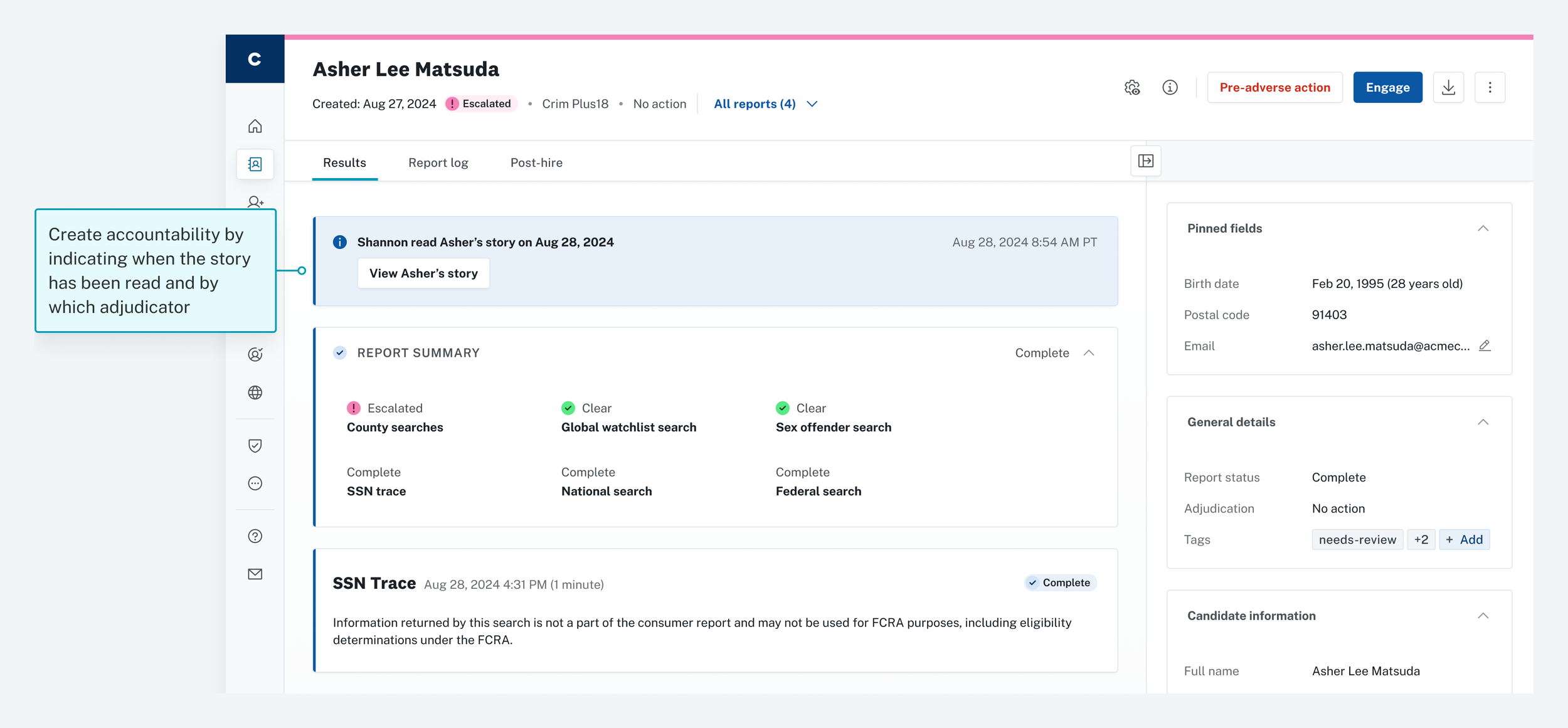
Key feedback: “I need a better workflow to see what stories have been shared and be able to indicate which ones I’ve reviewed”
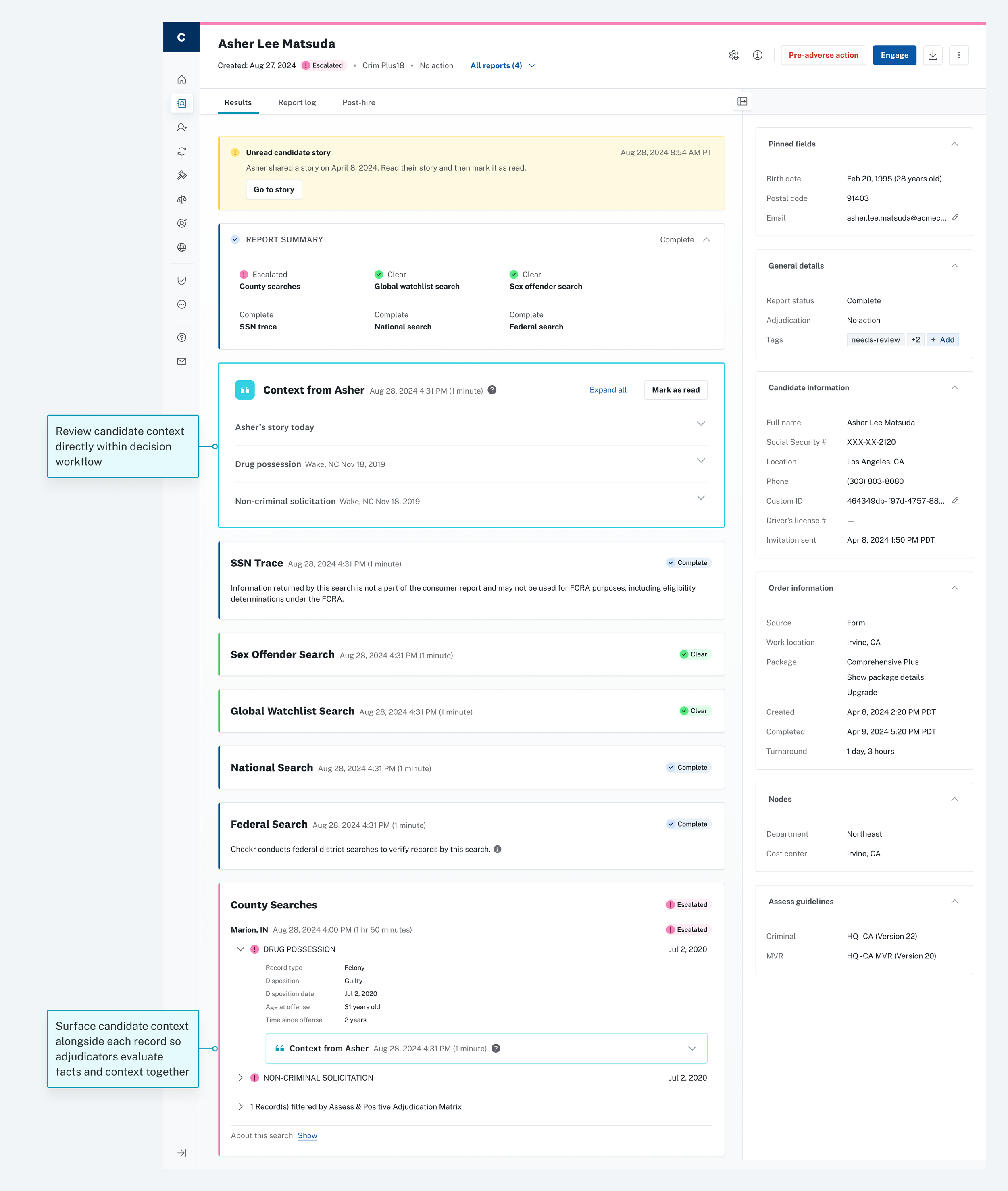
Design decision: Created a saved view around Candidate Stories and a way to easily indicate stories that have been read
Design constraints
Working with legal
I partnered closely with our legal and compliance to design Candidate Stories.
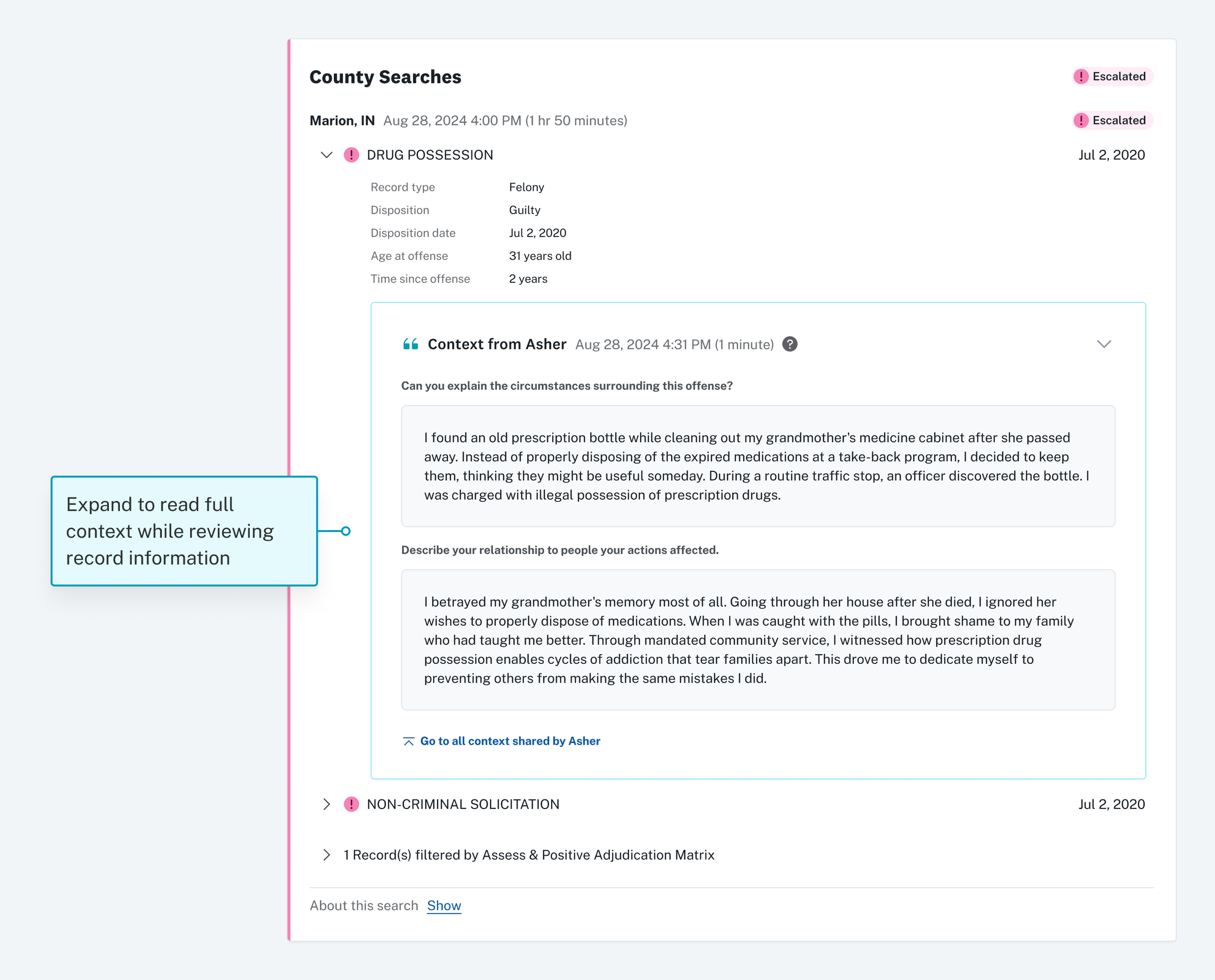
Legal feedback: “It needs to be clear that candidate stories is supplementary information and not part of the consumer report”
Design decision: Make it visually distinctive from the other the other screenings