AI policy builder
Policy Builder determines how employers evaluate candidates with criminal records, which directly influences access to employment.
When I joined, it was built for enterprise and required extensive setup and legal expertise. As Checkr expanded into mid-market and SMB, the challenge was scaling this high-stakes system and making it more accessible without increasing risk or bias.
I redesigned the experience around customer maturity, expanding adoption without compromising enterprise-level rigor.
Impact:
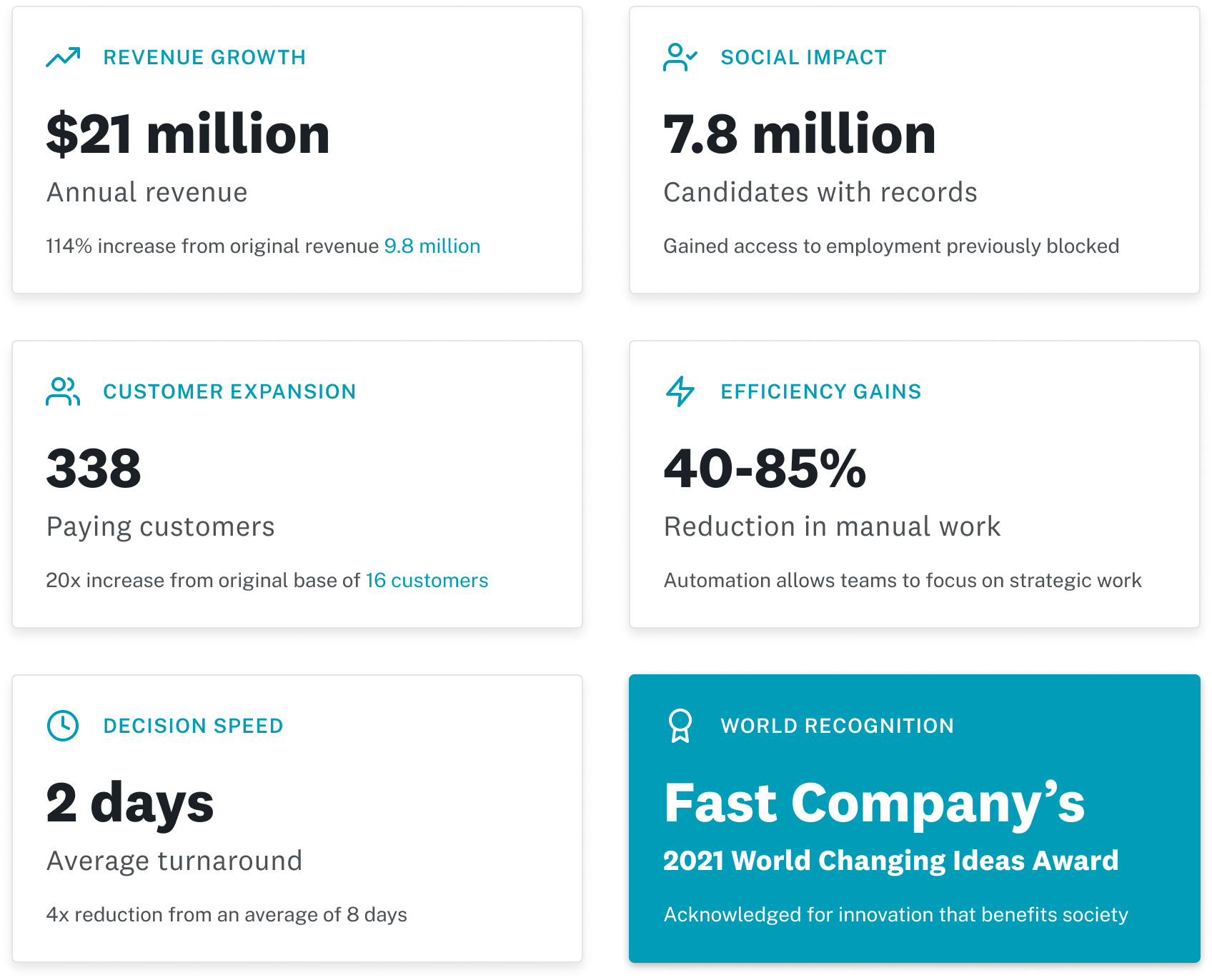
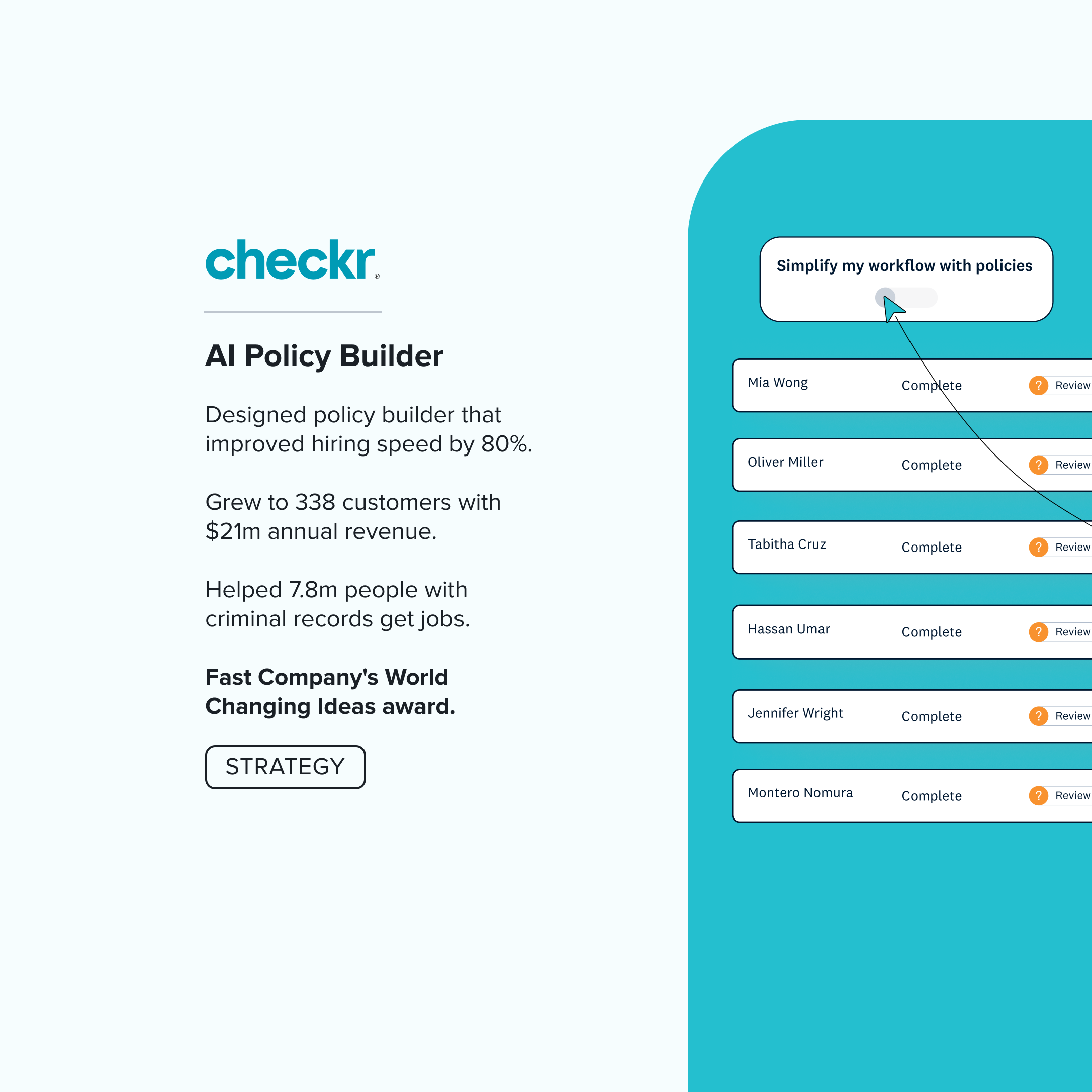
• 338 paying customers (from 16)
• 2.5x revenue growth
• 7.8M candidates with records gained access to employment
• Recognized by Fast Company’s World Changing Ideas
Team and scope
Company: Checkr
Role: Lead Product Designer
Length: 12 months
Team: UX Researcher, UX researcher, Product Manager, 9 engineers, Data analyst, Content designer, Compliance counsel
Year: 2023
Context
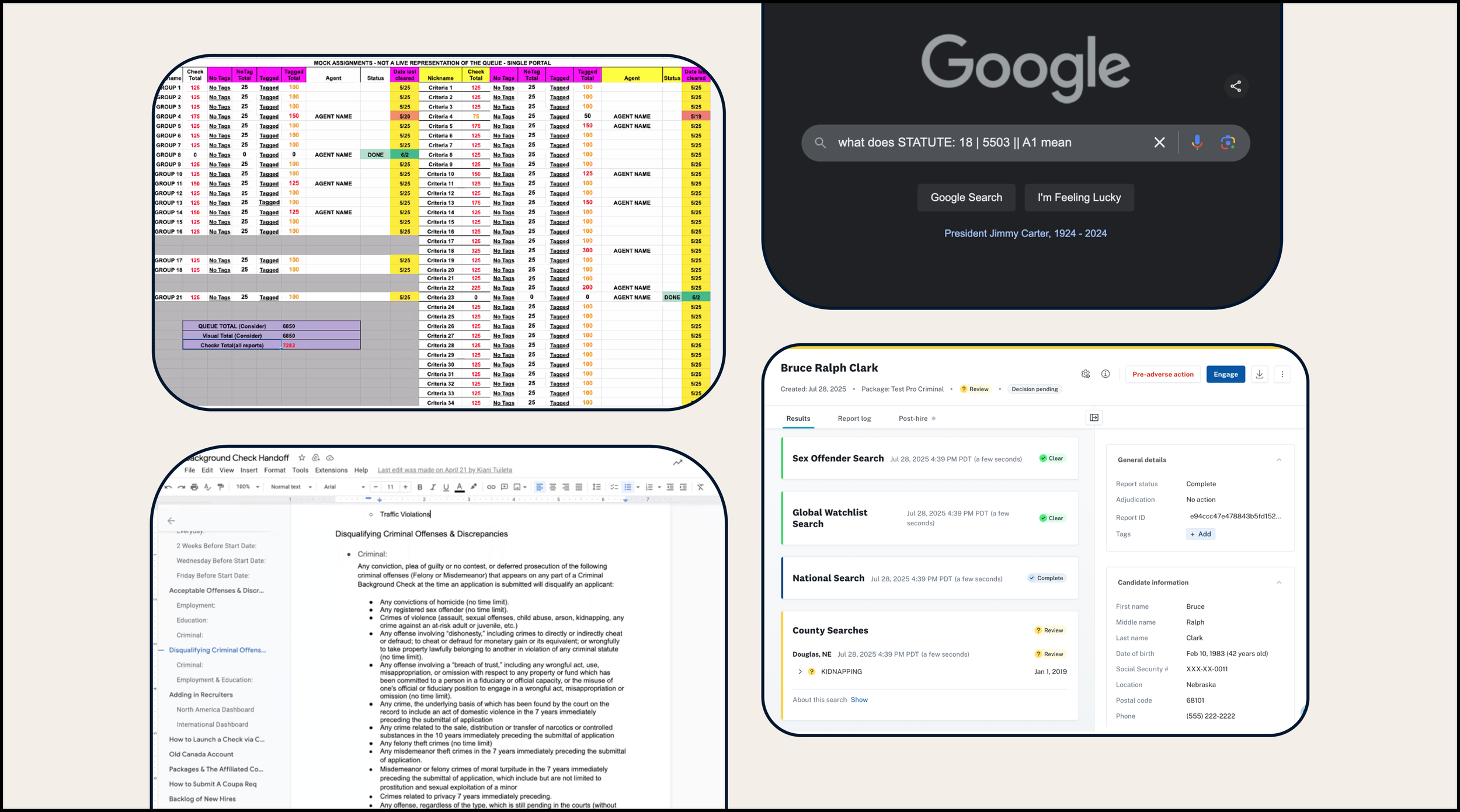
Checkr is an employment background check company. High-volume employers review thousands of background checks a day. They often have to google and reference separate documents because court records vary wildly in language and structure.
AI-powered charge classification
Checkr built an AI classifier that normalizes hundreds of thousands of charge names into 235 structured categories.
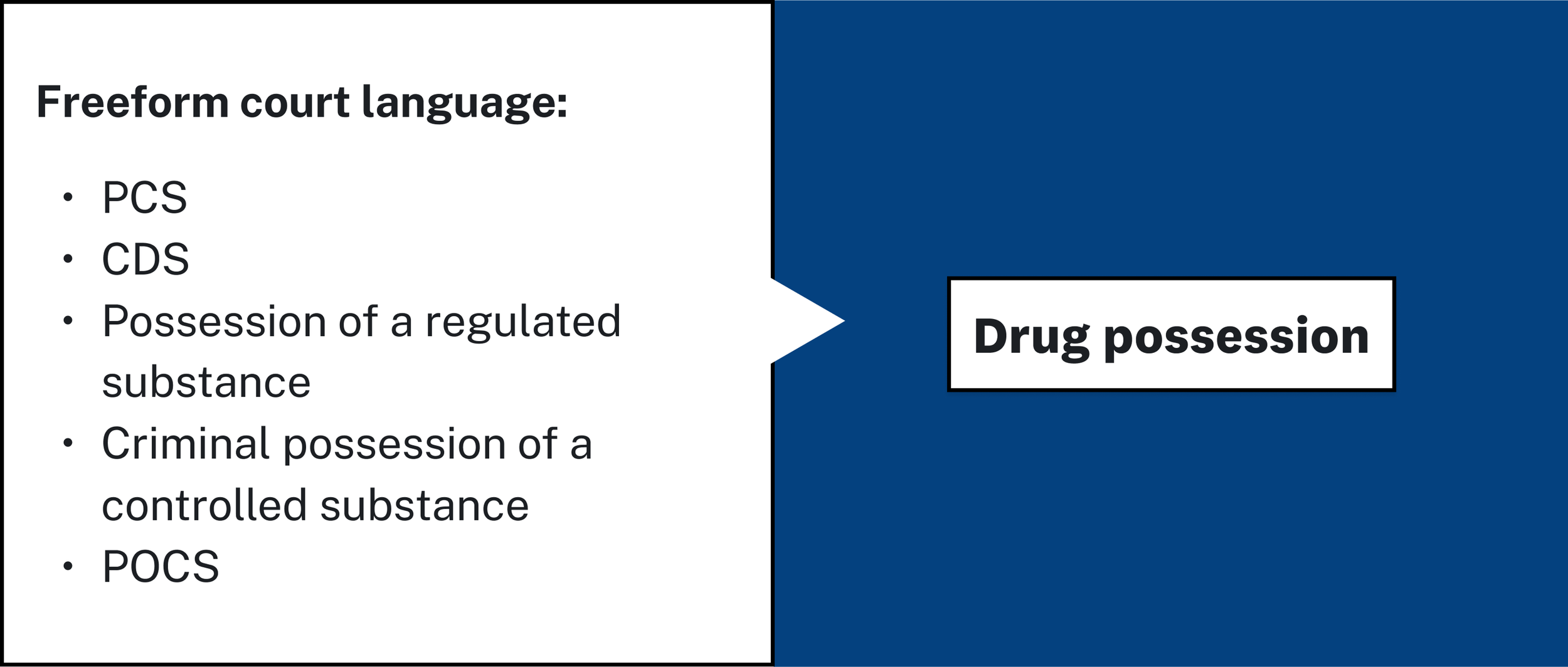
On top of this classification engine, Checkr built a Policy Builder that allows employers to define how they evaluate candidates with records and apply that logic automatically at scale.
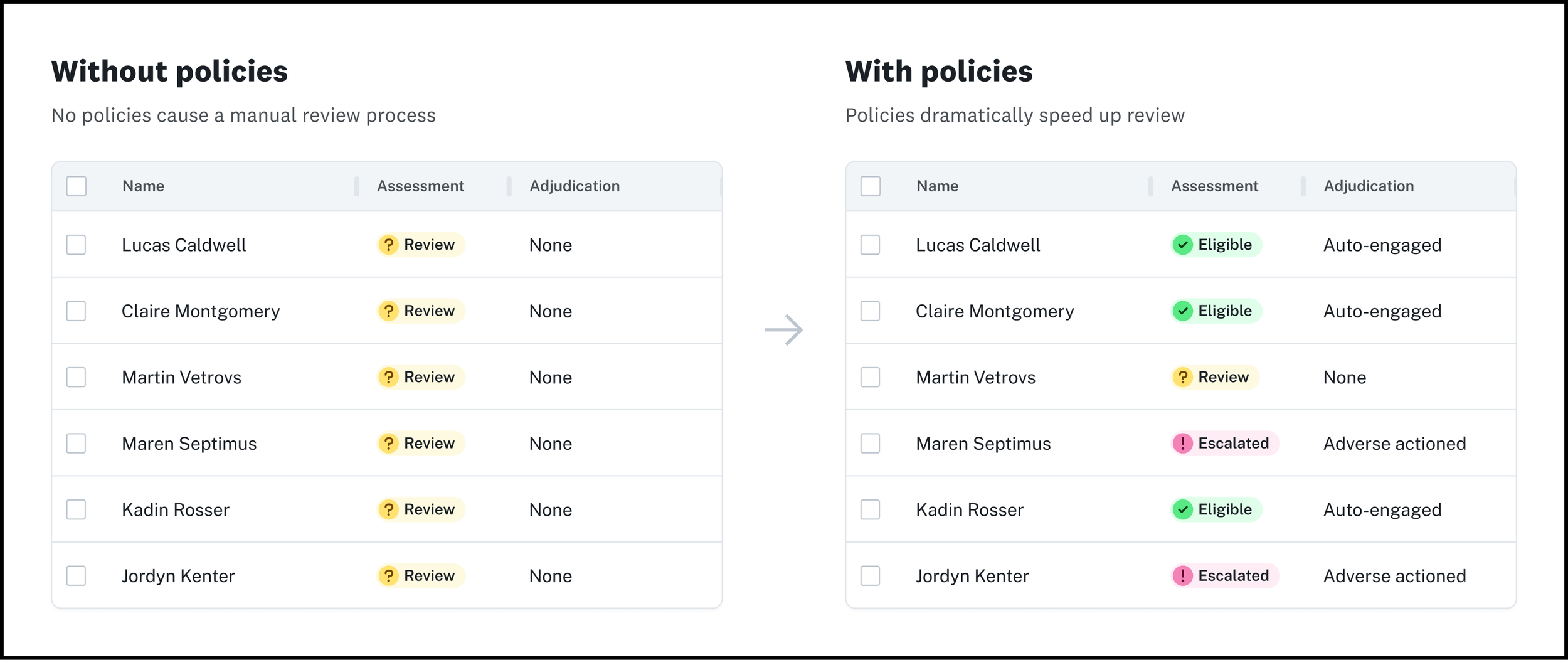
When I joined, the policy builder was Enterprise-only and focused on criminal records. The power of this system is that it automates standard decisions, leaving human review for edge cases.
Checkr built a powerful tool, but it was designed for high-volume, high-touch Enterprise teams.
The problem
In 2023, Checkr’s growth strategy was no longer Enterprise-only. Checkr had just acquired GoodHire to expand into small-to-medium businesses and midmarket. Our growth strategy had shifted downmarket, but our most powerful tool wasn’t built to scale down and serve those segments.
Despite powerful automation and advanced ML infrastructure, adoption was extremely low.
Heuristic audit of Enterprise experience
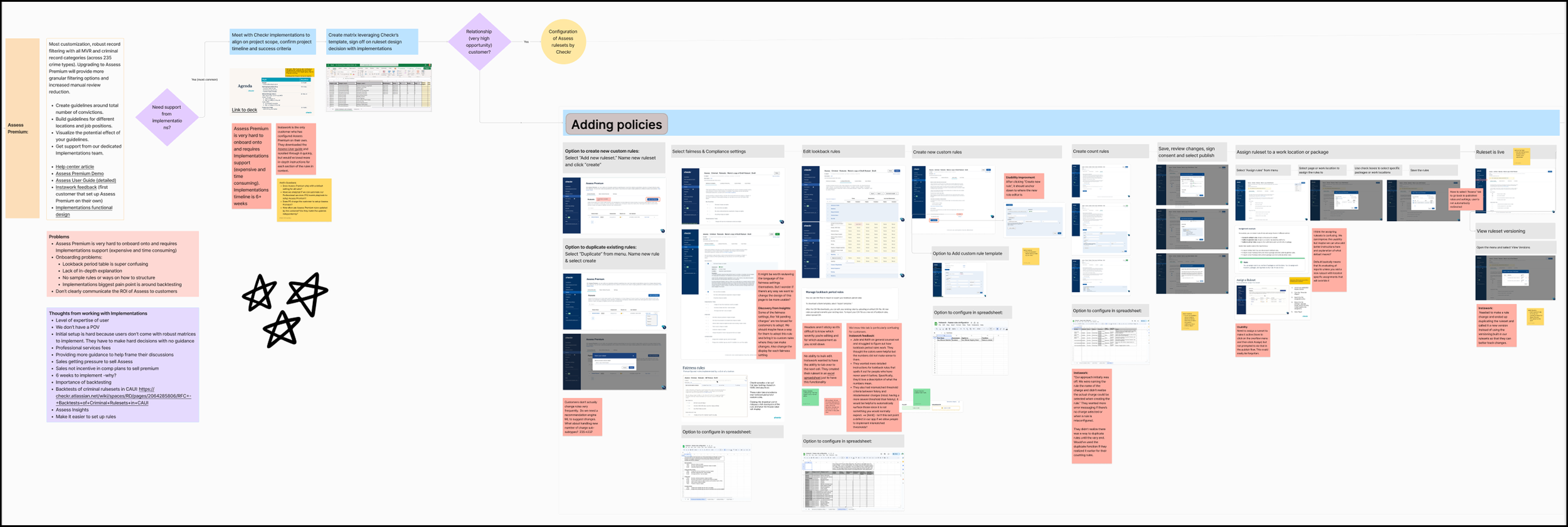
UX breakdown:
Information overload: 235 charge categories exposed simultaneously
Technical language: Many of our terms were written by engineering and confusing
No guidance: Customers felt lost configuring their policies
Business impact
Complex set-up: Takes 5 weeks to implement policies
Expensive: Need to pay for Checkr’s implementation team to support
Low adoption: High-touch, no product-led growth
How might we scale our policy builder to be simpler, more affordable, and self-serve so it supports more customers?
Research & Discovery
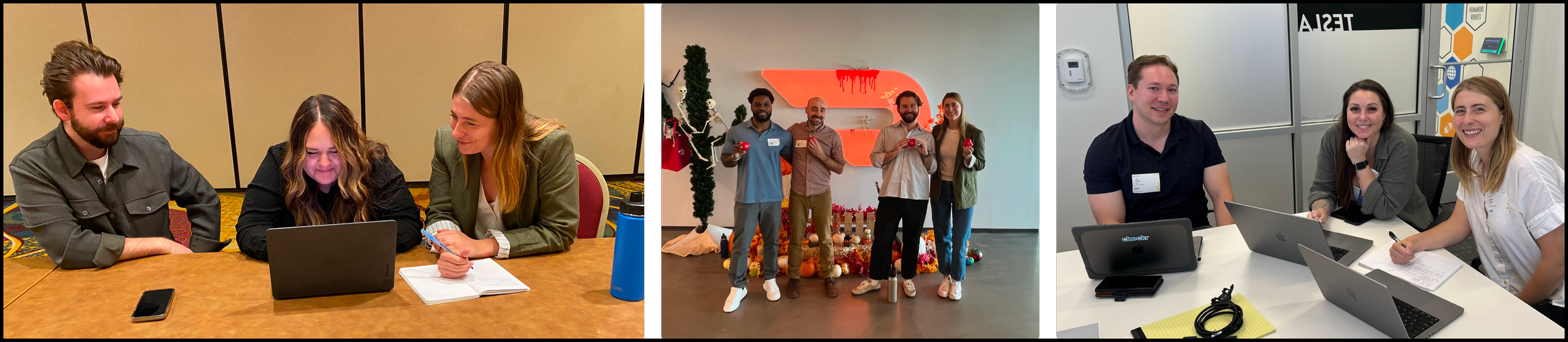
To start answering this question, I ran 75 customer interviews across SMB, Mid-Market, and Enterprise to map workflow complexity and decision patterns.
I shadowed Enterprise teams to observe how policies were actually created and used.
What looked like a usability problem was actually a segmentation problem.
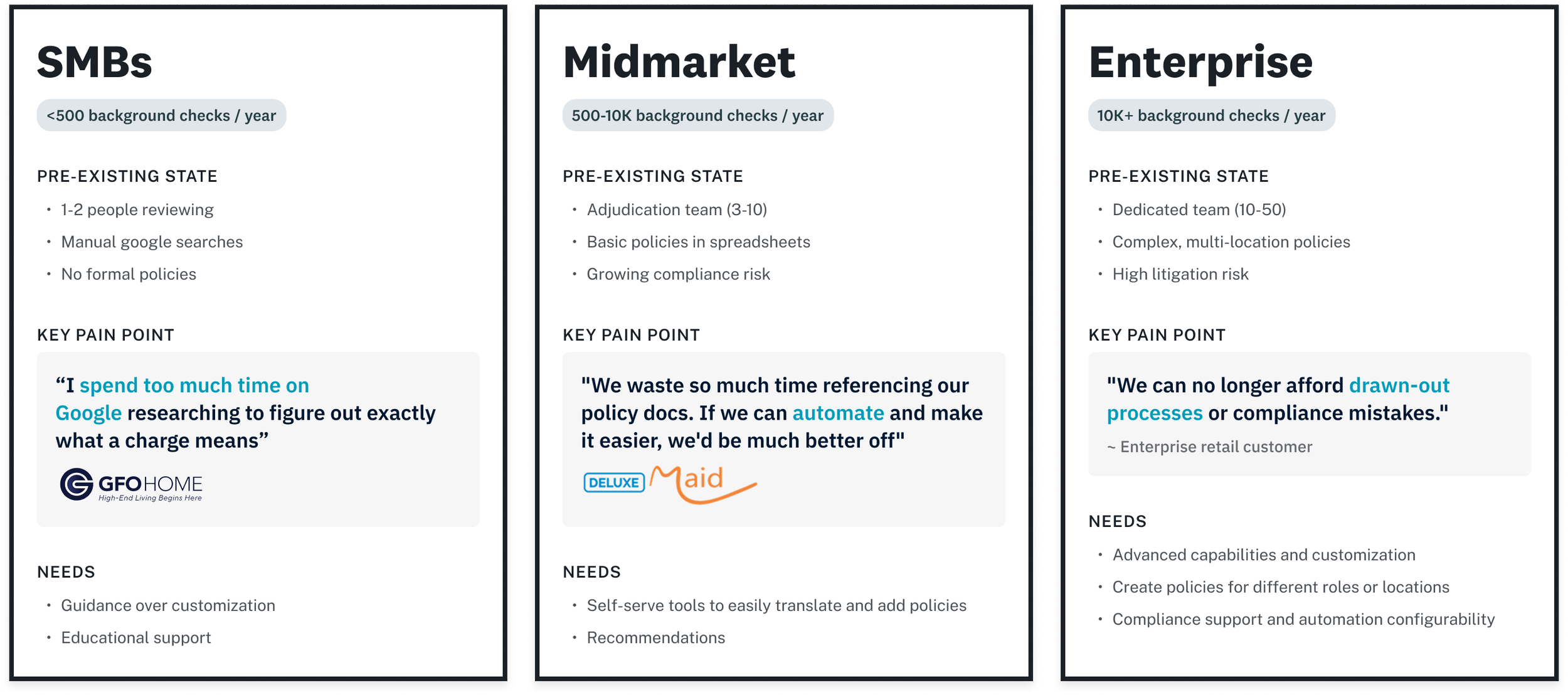
I learned that:
SMB customers want guidance
Mid-Market customers want simple automation
Enterprise customers wants full control and configurability
This segmentation became a core pillar of my design strategy.
Defining the strategy
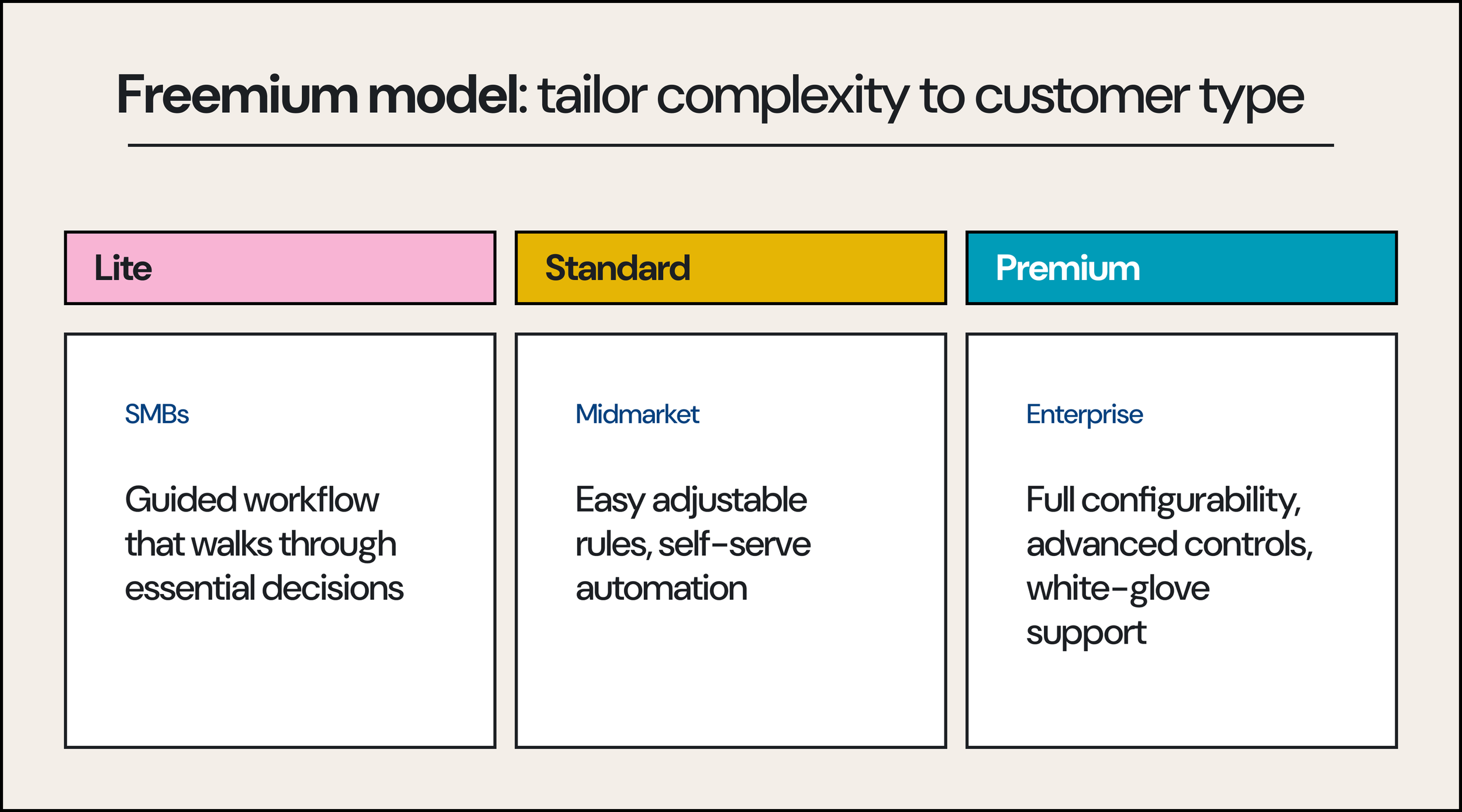
Freemium model: tailor complexity to customer type
Based on these different needs, I designed a freemium model with three tiers:
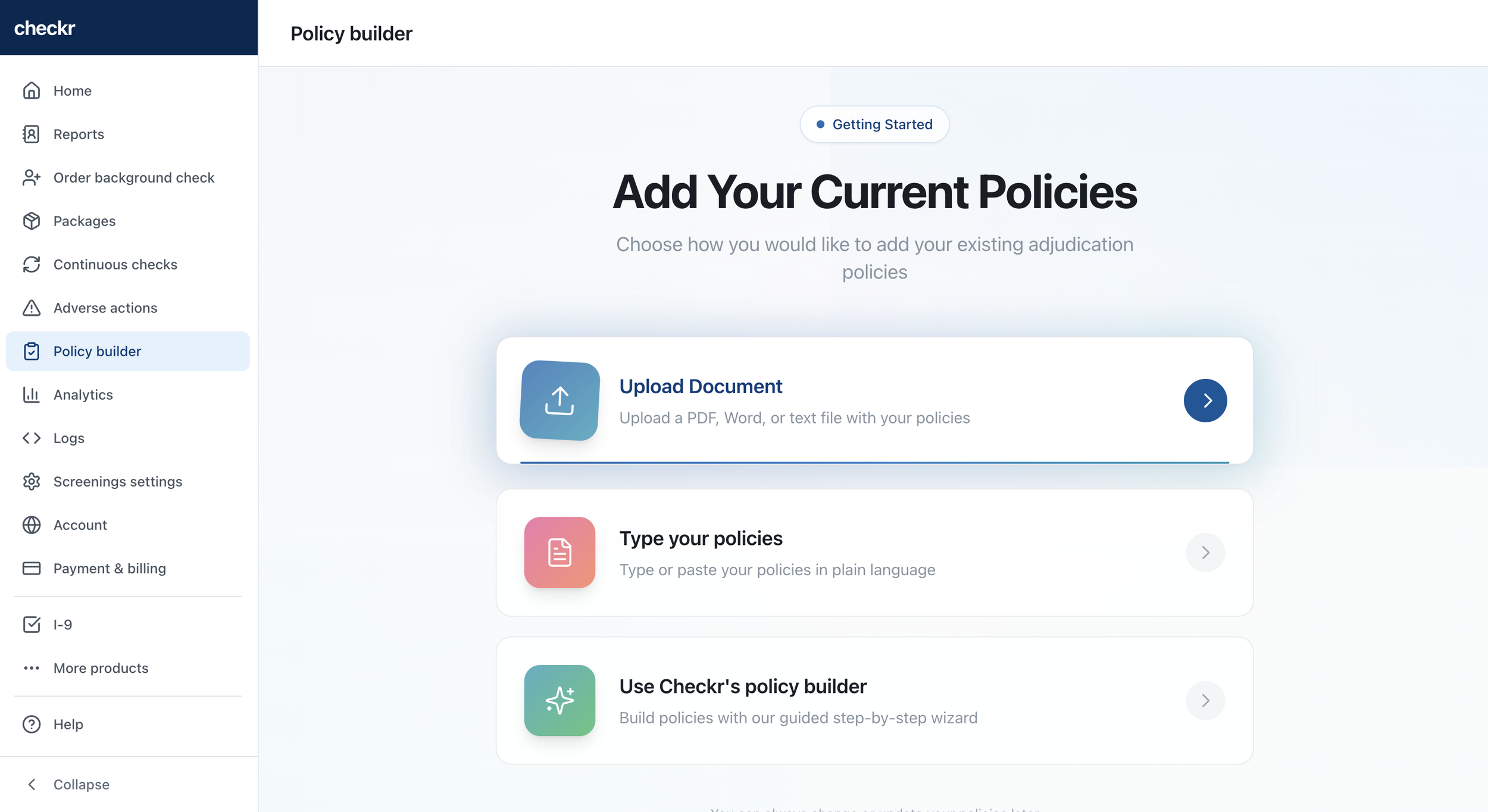
Lite is designed for SMBs and it's a step-by-step guided workflow that walks through essential decisions.
Standard is all about ease of use while having more control. Customers can self-serve add their policies and build logic to easily automate decisions
Enterprise has robust customization, advanced tooling, and white-glove support
Design solution deep-dives
I shifted from Enterprise-first design to maturity-based design. I designed a tier-specific approach ensured we didn’t overwhelm smaller teams while still giving advanced customers the power they needed.
Lite (SMB)
Lite gives small businesses a guided starting point, not a blank slate. SMBs want to configure policies with as little friction as possible and want more information in-context.
Standard (Midmarket)
For Midmarket customers wanting more control, I introduced templates and self-serve automation.
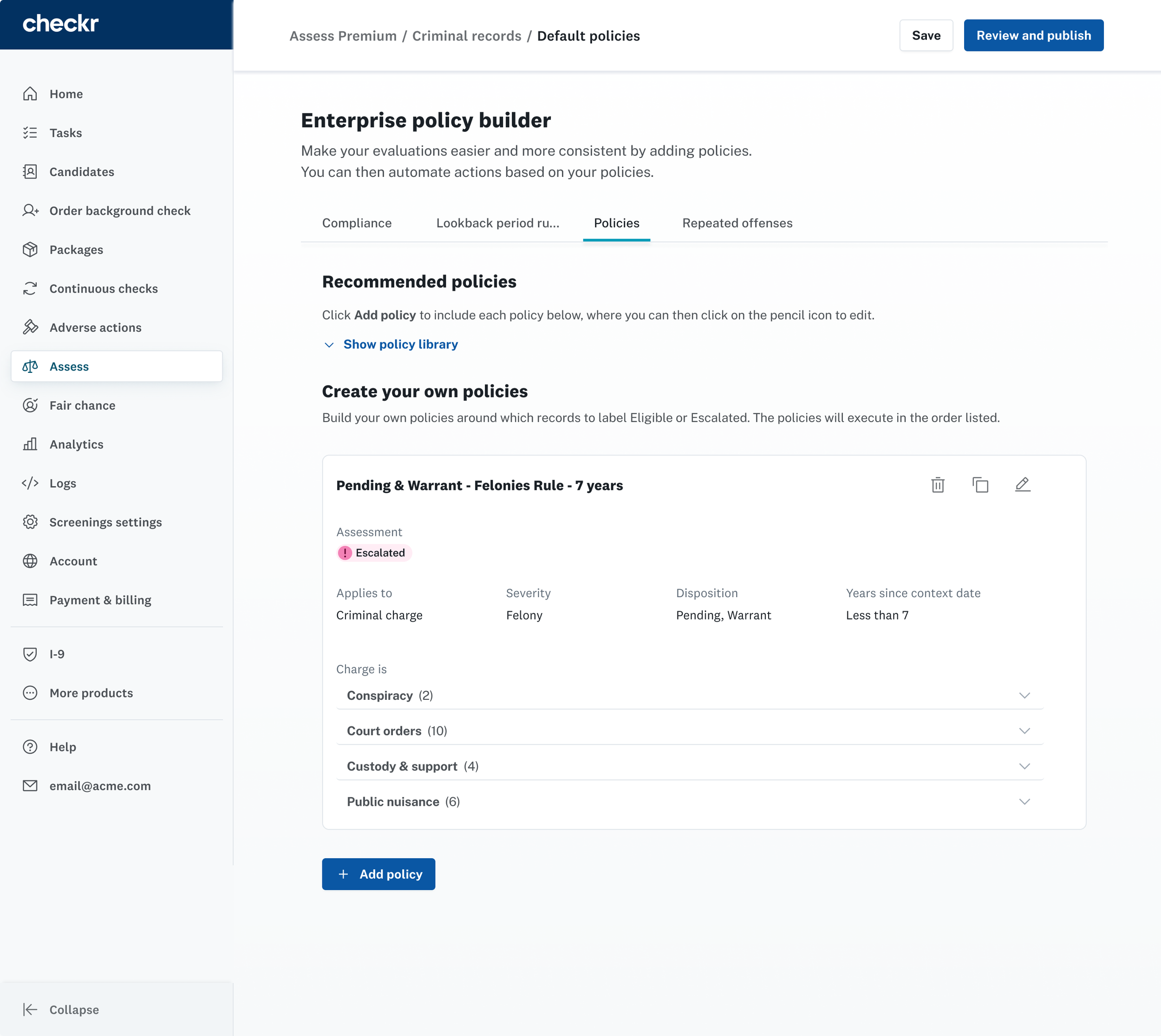
Premium (Enterprise)
For sophisticated Enterprise teams, I expanded the existing product to support multiple roles and locations and support built-in compliance.
Design principles
Qualify over disqualify
Progressive disclosure
More in-context
Policies don’t live in the builder. They show up in real hiring decisions.
One consistent piece of feedback we heard was that customers didn’t understand the charges on background checks, which meant they were leaving our product to Google statutes.
I championed bringing policy logic and ML charge definitions directly on the background check. I surfaced plain-language explanations to reduce confusion and increased trust.
The charge definitions became one of our most celebrated features.
“I love ‘what does this charge mean.’ We’ve spent so much time searching to understand before.”
Design system contributions
Product-level patterns
System-wide contributions
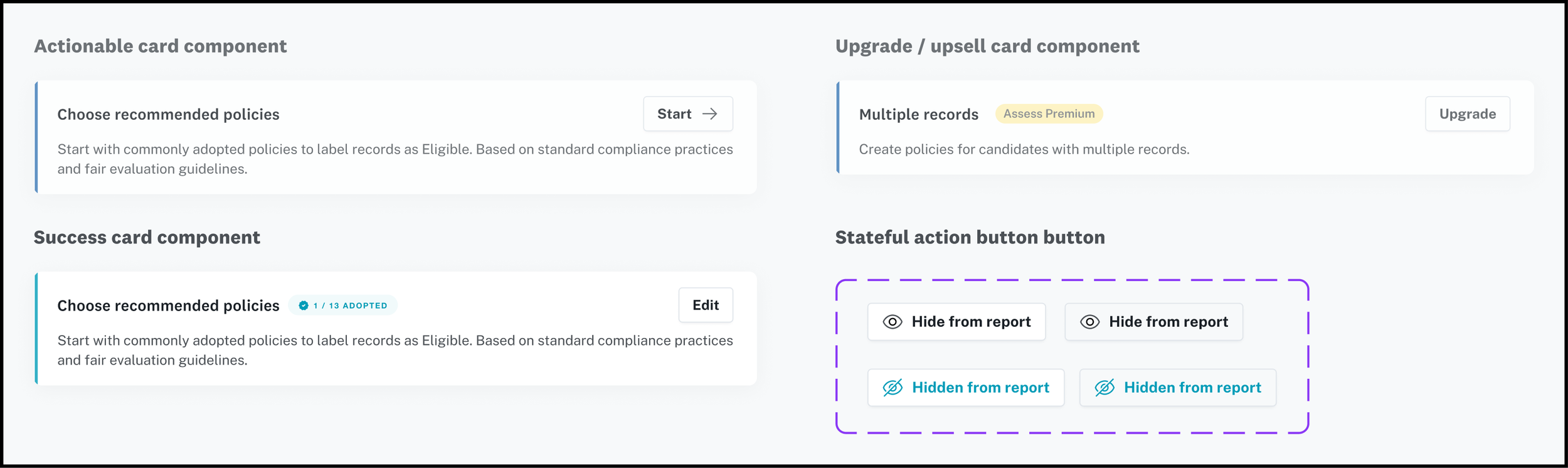
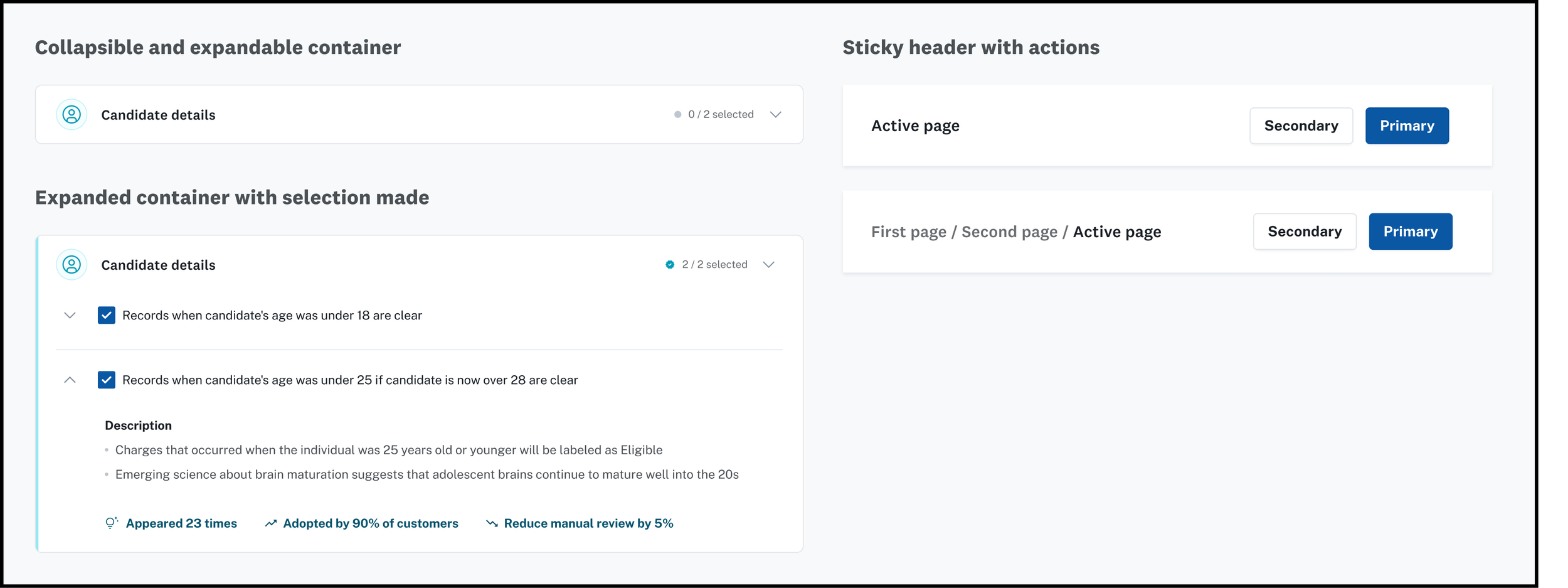
I built modular components that worked across all three customer tiers, enabling faster iteration and future expansion.
Created action card and success card components adopted across 3 product teams
Established progressive disclosure pattern that became standard for complex configuration UIs
Built breadcrumb component with actions reused by onboarding team
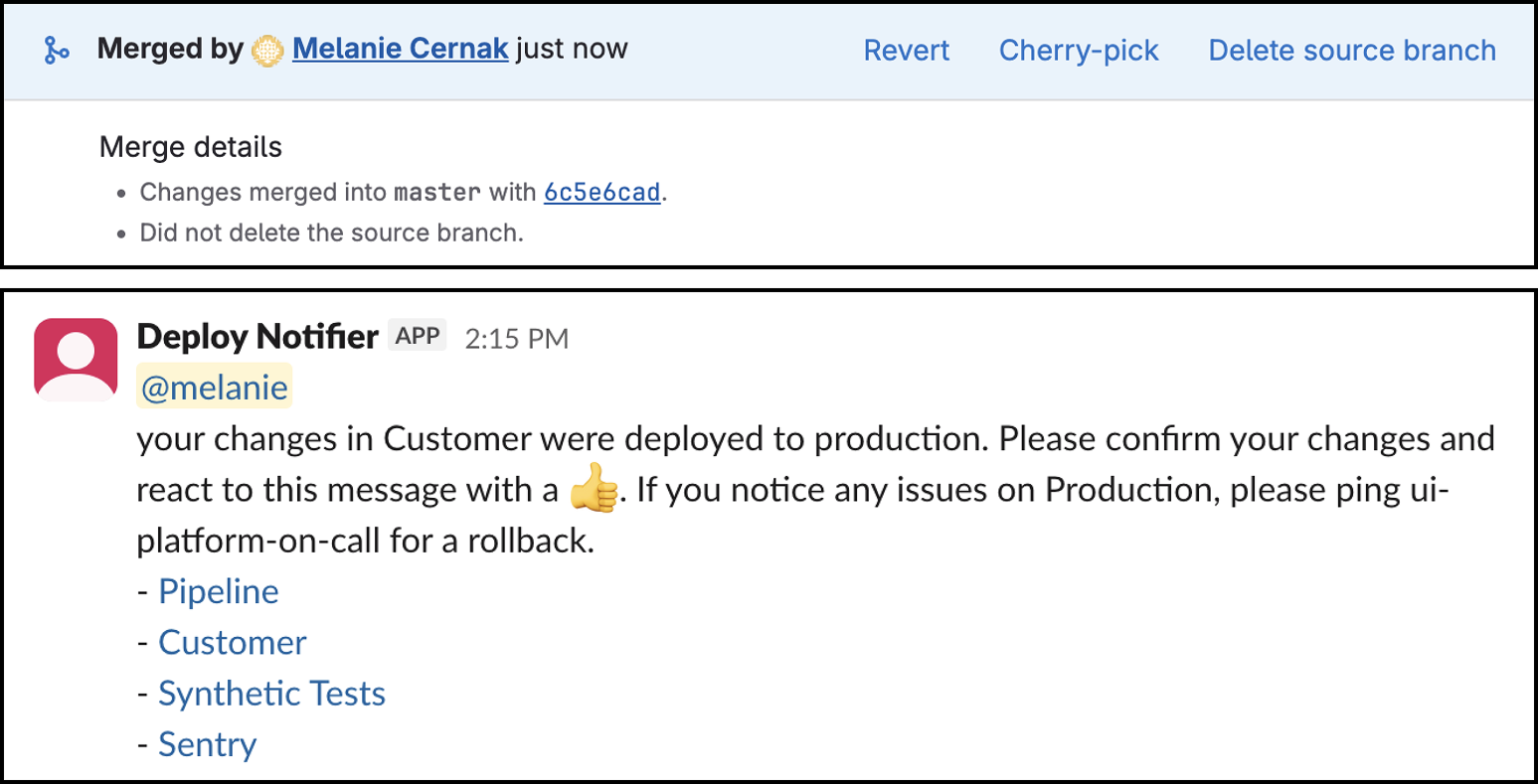
Maintaining visual quality with design QA using Cursor
I introduced lightweight design QA workflows using Cursor to reduce feedback loops and ensure strong visual design.
Impact
The impact of all three tiers of the policy builder was:
Revenue growth: $21M annually
Customer expansion: 338 paying customers
Decision speed: 2 days on average
Efficiency gains: 40-85% reduction in manual work
Award recognition: Fast Company's World Changing Ideas Award